
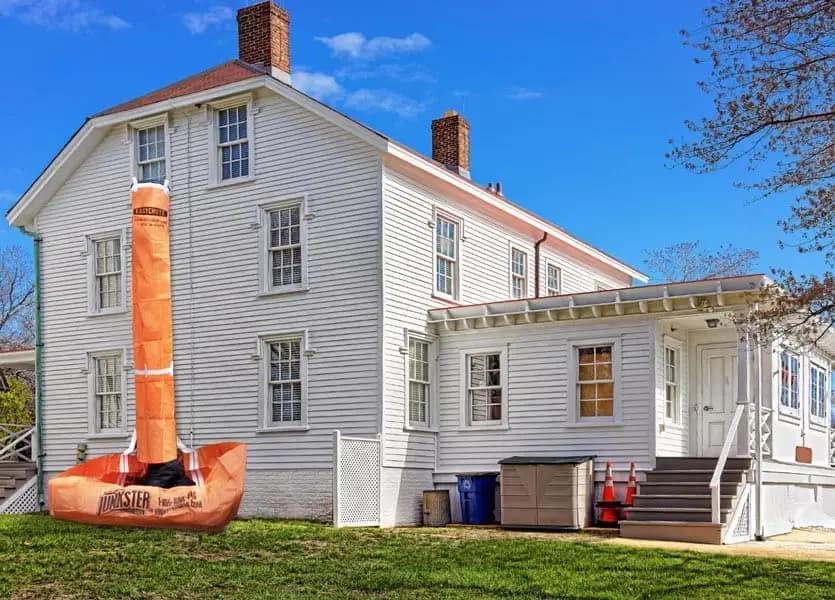
Whether you're gutting a rowhouse in Philadelphia, tearing off a roof in Pittsburgh, or remodeling a century-old colonial in Allentown, a trash chute in Pennsylvania is one of the most practical tools on any renovation or demolition site. Instead of carrying load after load of drywall, shingles, or plaster down a staircase — or pitching debris off a roofline and hoping nobody walks below — a fabric construction chute sends waste straight from the upper floors into a dumpster at ground level, cleanly and safely.
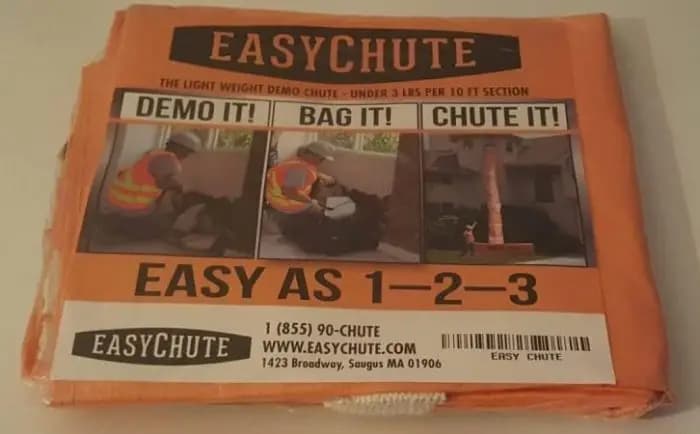
EasyChute makes lightweight debris chutes from woven, coated poly fabric and ships them free to job sites anywhere in Pennsylvania. There's no rental agreement, no depot pickup, and no freight surcharge — just a fixed price, free shipping, and a chute that shows up ready to hang. If you're a contractor, roofer, property manager, or homeowner tackling a serious cleanout, this page walks you through everything you need to get the right sections for your PA project and get them ordered today.
Trash chutes shipped free to Pennsylvania
Free shipping on every order. See the full shop.
Why Pennsylvania Crews Rely on a Construction Trash Chute
Pennsylvania's building stock is older than the national average. Philadelphia's tight grid of two- and three-story brick rowhouses, Pittsburgh's narrow hilltop Victorians, and the dense mill-era housing throughout the Lehigh Valley and Scranton all share a common trait: multiple stories, no room to swing a wheelbarrow, and a dumpster sitting at street level below. That combination makes a debris chute less of a luxury and more of a necessity.
Common project types across the state where crews put a chute to work include:
- Roofing tear-offs — stripping architectural and three-tab shingles from sloped roofs on two- and three-story homes
- Interior gut jobs — pulling out plaster and lath, drywall, and insulation from older rowhouses or apartment buildings during a full renovation
- Window and siding replacements — managing the steady stream of broken glass, trim, and old cladding
- Commercial strip-outs — clearing flooring, ceiling tile, and framing from multi-story office or retail spaces in downtown Philadelphia or Pittsburgh
For more on how Pennsylvania contractors are using debris chutes on these kinds of projects — and the mistakes to avoid — see our guide to common debris chute mistakes Pennsylvania contractors make.
Choosing the Right Trash Chute Sections for Pennsylvania Buildings
EasyChute sections come in three lengths: 10 ft, 25 ft, and 50 ft. A 10 ft section covers roughly one story, a 25 ft section covers about two and a half stories, and a 50 ft section handles approximately five stories. Sections connect loop-to-loop with carabiners or quick-connects, and every joint overlaps 1.5 ft to keep dust and debris contained. Middle shortening straps let you fine-tune the total length so the bottom of the chute sits right at dumpster height.
Here's how to match sections to the building heights you'll encounter most in Pennsylvania:
- Two-story rowhouse or single-family home (20–24 ft) — Two 10 ft Lite-Duty sections ($99 each) cover the drop comfortably, or a single 25 ft section ($277) gives you a little extra length to fine-tune with the shortening straps.
- Three-story Philadelphia rowhouse or Victorian (30–36 ft) — Three 10 ft Heavy-Duty sections ($149 each) handle the weight of dense plaster and brick debris, or combine a 25 ft section with a 10 ft section for the same reach.
- Four- to five-story apartment or commercial building — The 50 ft section ($596) is the single most efficient option, covering up to five stories without the need to connect multiple pieces.
- Taller commercial or mixed-use buildings — Connect a 50 ft section with additional 10 ft or 25 ft sections as needed. Each section weighs under 15 lbs, so one person can carry the whole setup to the roof.
Not sure whether lite-duty or heavy-duty is right for your project? As a rule of thumb, lite-duty works well for lighter loads like insulation, wood scraps, and light drywall. If you're running dense plaster, roofing shingles, or anything with significant weight and volume, the heavy-duty section gives you extra durability. Browse the full lineup at our shop.
The OSHA 20-Foot Rule: What Pennsylvania Contractors Need to Know
OSHA regulation 29 CFR 1926.252(a) requires that when material is dropped more than 20 feet to any point outside the exterior walls of a building, an enclosed chute must be used. That rule applies on Pennsylvania job sites the same as anywhere else in the country, and it's a real compliance issue on the three- and four-story buildings that are common throughout the state.
EasyChute meets or exceeds the applicable OSHA requirements. The overlapping loop connections and 22-inch enclosed diameter keep debris contained from the drop point to the dumpster below, satisfying the intent of the regulation. Always verify specific site requirements with your project supervisor or local building department — permit and inspection rules can vary by municipality across Pennsylvania.
For Philadelphia-specific guidance on using a debris chute on urban rowhouse and commercial projects, see our Philadelphia debris chute page.
Working Through Pennsylvania's Weather
Pennsylvania has a genuinely four-season climate. Summers in Philadelphia and the southeastern part of the state can be hot and humid. Winters in Pittsburgh, Erie, and the Pocono region bring significant snowfall and cold temperatures. Spring and fall are unpredictable statewide, with rain and wind common across all regions.
Before hanging a chute in windy or stormy conditions, secure the chute firmly to the anchor point and use all four connection loops at each joint. In cold weather, check that carabiners and quick-connects operate freely before clipping sections together. The woven, coated poly fabric the chute is made from is tear-resistant and built to handle the physical demands of debris flow — it's a rugged fabric for a tough job.
How to Set Up a Trash Chute on a Pennsylvania Job Site
Setup is straightforward and doesn't require any special tools, outriggers, or rental equipment. Here's a typical workflow:
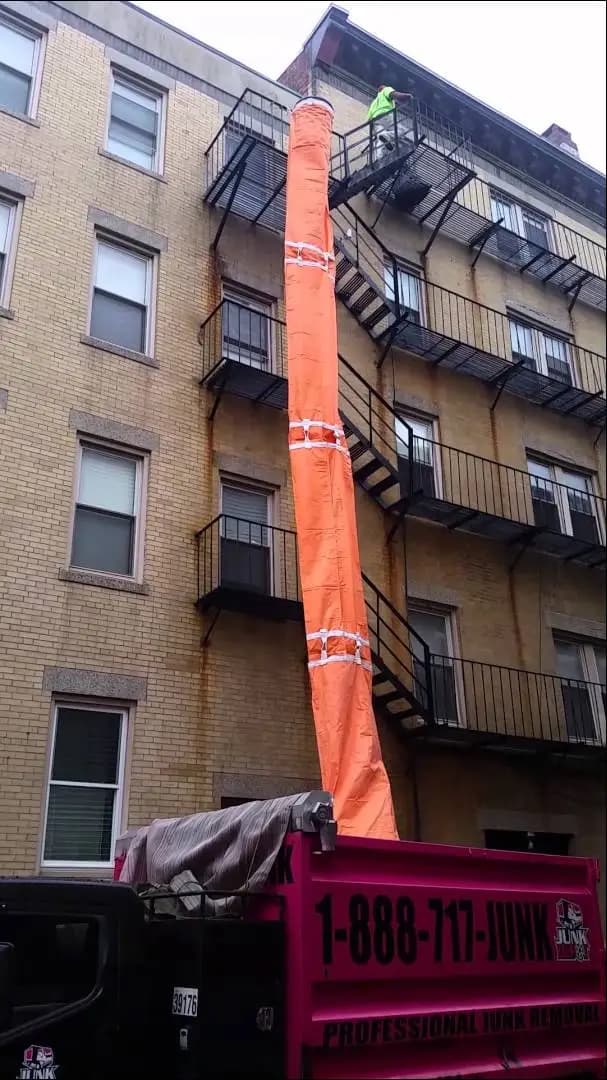
- Stage the dumpster — Position your roll-off or debris container directly below the drop point. Leave enough clearance so the bottom of the chute lands inside the container.
- Build the hopper — A standard 32-gallon commercial trash can with the bottom cut out makes a solid funnel at the top of the chute. Set it at the window, roof edge, scaffold platform, or fire escape landing where debris will be loaded.
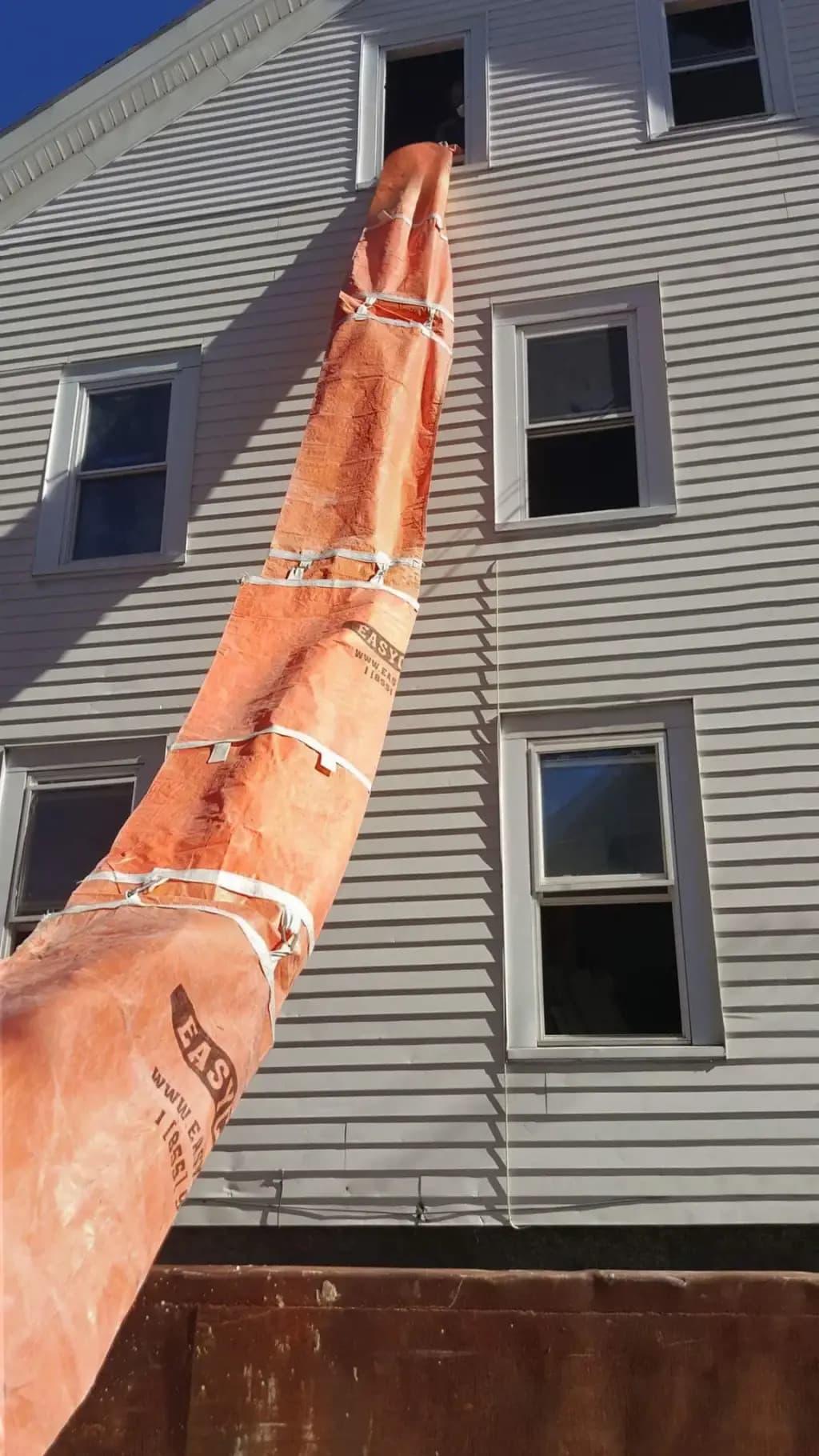
- Hang the first section — Use the four woven loops at the top of the uppermost section to secure the chute to a scaffold rail, window frame, or roof anchor. Distribute the load across all four loops.
- Connect additional sections — Clip each section loop-to-loop using carabiners or quick-connects. The 1.5-ft overlap at every joint keeps dust and debris from escaping at the connection points.
- Adjust with the shortening straps — Use the middle shortening straps to dial in the final length so the chute bottom sits at the right height above your dumpster.
- Start loading — Feed debris steadily into the hopper. Avoid large, jagged chunks that could catch; break down oversized pieces before they go in.
After the job, shake out the chute, fold each section, and store it. A 10 ft section weighs under 3 lbs and folds down to fit in a drawer or small box. The same sections come back out on the next job, ready to hang again.
Free Shipping to Pennsylvania Job Sites
Every EasyChute order ships free to any address in the United States — that includes job sites in Philadelphia, Pittsburgh, Allentown, Scranton, Erie, Reading, and everywhere in between. There are no freight charges, no dock pickup requirements, and no minimum order size. Order at a fixed price online and the chute comes to you.
If you have questions before ordering, call us at 855-902-4883 (Monday–Friday, 8 AM–10 PM Eastern) or email orders@easychute.com via our contact page. Otherwise, head straight to the shop and pick the sections that fit your building.
Contractors working on aging homes and accessibility projects may also find our guide to debris chutes for aging-in-place renovations in Pennsylvania useful. And if you're weighing whether to buy or rent, see our breakdown of debris chute rental vs. buying in Philadelphia.
Frequently asked questions
Does EasyChute ship trash chutes to job sites in Pennsylvania?
Yes. EasyChute ships free to any job site or address in Pennsylvania — Philadelphia, Pittsburgh, Allentown, Erie, Scranton, or anywhere else in the state. There are no freight surcharges and no minimum order. Order online at fixed prices and the chute ships directly to you.
What size chute section do I need for a typical Pennsylvania rowhouse?
Most two-story rowhouses fall in the 20–24 ft range, which two 10 ft sections or a single 25 ft section covers well. A three-story rowhouse typically needs 30–36 ft of chute, so three 10 ft sections or a 25 ft combined with a 10 ft section works. Use the shortening straps to fine-tune the drop so the bottom sits right above your dumpster.
Does OSHA require an enclosed chute on Pennsylvania job sites?
OSHA regulation 29 CFR 1926.252(a) requires an enclosed chute when material is dropped more than 20 feet to any point outside a building's exterior walls. EasyChute meets or exceeds the applicable OSHA requirements with its enclosed fabric design and overlapping section joints. Always confirm specific permit and inspection requirements with your local Pennsylvania building department, as rules can vary by municipality.
Can I reuse an EasyChute on multiple Pennsylvania projects?
Absolutely. EasyChute sections are designed to be reused job after job. After each project, shake out the debris, fold the sections down — a 10 ft section weighs under 3 lbs and fits in a drawer or small box — and store them until the next job. There's no rental return deadline and no per-use cost after your initial purchase.
How do I connect multiple EasyChute sections for a taller Pennsylvania building?
Each section has four woven loops at the top and four at the bottom. Sections connect loop-to-loop using carabiners or quick-connects, which are not included but are widely available at hardware stores. Every connection overlaps by 1.5 ft to keep dust and debris contained at the joint. For a five-story building, the 50 ft section handles the full drop in a single piece with no mid-run connections needed.
Nearby states
Related guides
- Debris Chute Setup for Aging-in-Place Renovations in Pennsylvania: 2026 Complete Contractor Guide
- Debris Chute Setup Mistakes to Avoid: Pennsylvania Contractors 2026 Complete Guide
- Debris Chute Philadelphia Contractors: Complete Setup & Local Compliance Guide for 2026
- Debris Chute: Complete 2026 Contractor Setup, Safety & Performance Guide