
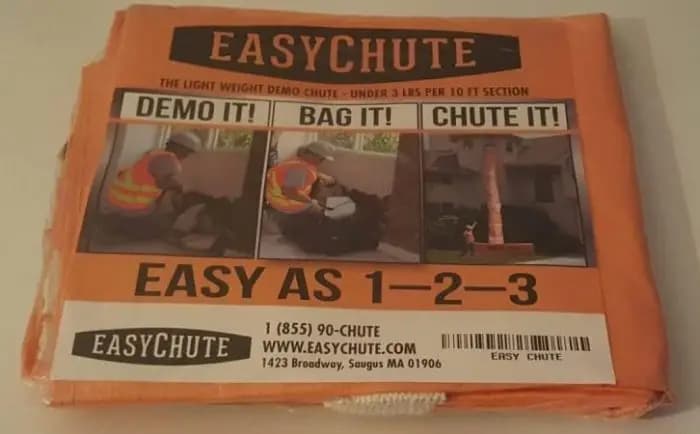
Need a trash chute in Maine? Whether you're tearing off a cedar-shingled roof in Portland, gutting a Victorian in Bangor, or renovating a historic mill building in Lewiston, getting debris to the ground safely and efficiently is one of the first problems you solve on any job. EasyChute ships lightweight, woven coated-poly fabric debris chutes directly to your Maine job site — free shipping, fixed prices, no rental hassle.
Maine's building stock runs the full spectrum: old farmhouses and saltbox colonials in the midcoast, downtown mixed-use buildings in Augusta, and waterfront properties up the coast toward Bar Harbor. Projects here often mean steep pitches, tight lots, and debris that needs a clear path to a dumpster without landing on a neighbor's car or a busy sidewalk. A fabric construction chute handles all of it — and it packs down small enough to ride in your truck cab when the job is done.
Trash chutes shipped free to Maine
Free shipping on every order. See the full shop.
Why Maine Crews Rely on a Fabric Trash Chute
Roofing, window replacement, plaster demo, and insulation tear-outs are bread-and-butter work across Maine. The state has a dense inventory of older homes — two- and three-story wood-frames, brick commercial blocks, and converted mill buildings — where debris can't simply be tossed off a roof edge without risking workers, bystanders, and property below.
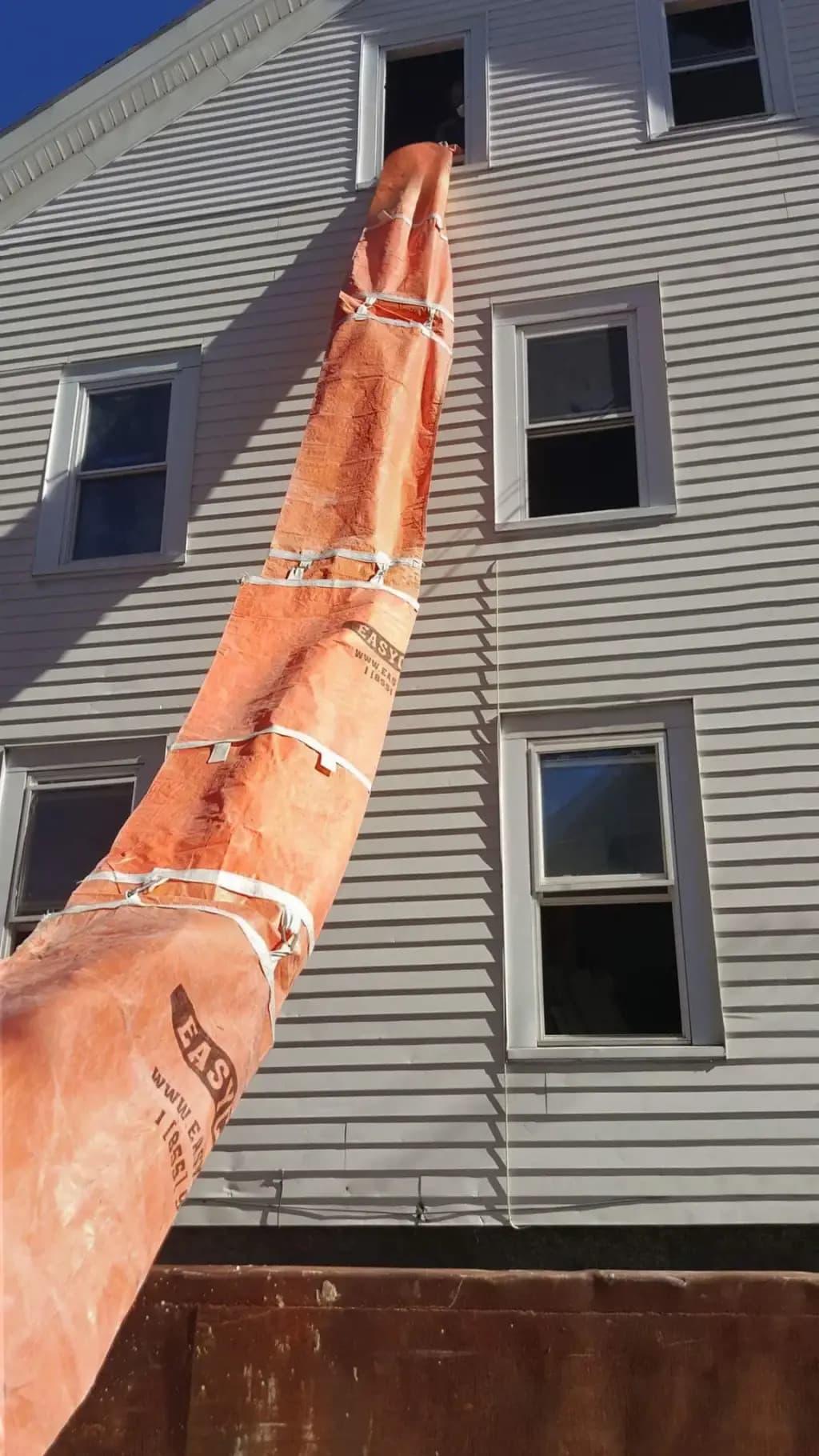
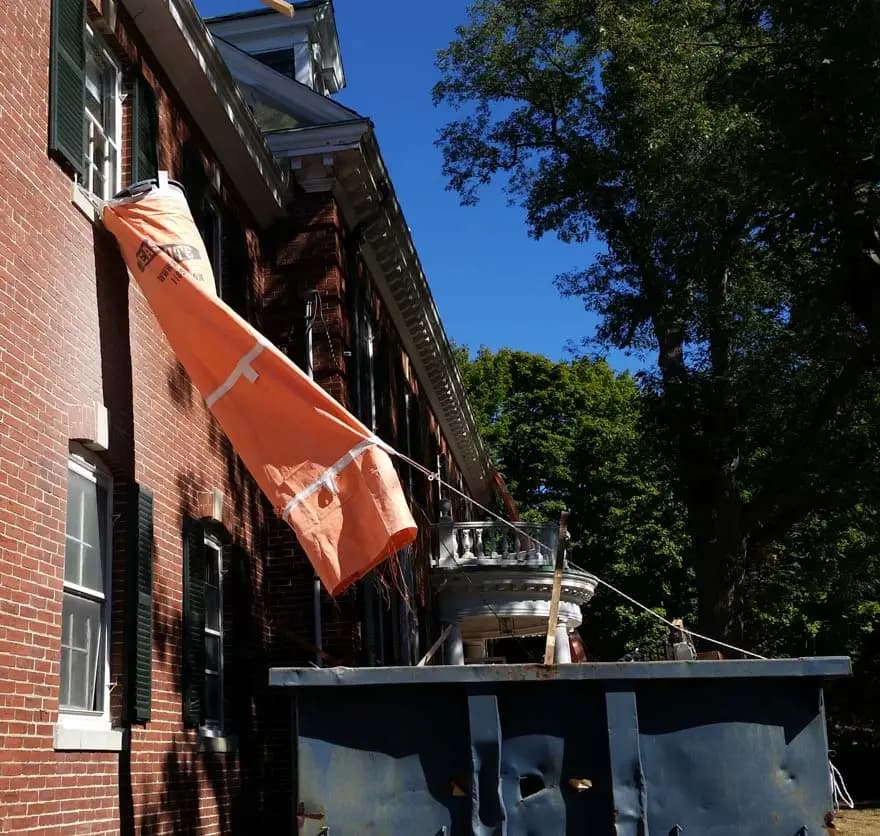
A fabric debris chute keeps material moving in a controlled path from the work level straight to your container. Because EasyChute sections weigh under 15 lbs even at 50 feet, one worker can carry the whole system from the truck. There's no rental company to call, no outrigger frame to assemble, and no extra crew member standing by to catch falling material. That matters on Maine jobs where crews are often lean and margins are tight.
The chute is built for the debris you're actually moving: roofing shingles, drywall, plaster and lath, wood scraps, and insulation. The 22-inch diameter opening handles bulky loads without jamming, and the overlapping joint design — each section overlaps the next by 1.5 feet — keeps dust and fine debris contained rather than billowing into the air or onto a neighboring property.
Choosing the Right Trash Chute Section for Maine Building Heights
Getting the section length right means less fussing on the job. Here's how EasyChute sections map to common Maine building heights:
- 10 ft section (~one story): Good for single-story garages, additions, and low-slope roofs. Connect multiples for taller work. The Lite-Duty 10 ft section at $99 is a solid starting point for light residential demo.
- 25 ft section (~two and a half stories): Covers the majority of Maine's two- and three-story wood-frame homes in one drop. The 25 ft section runs $277 and arrives ready to hang.
- 50 ft section (~five stories): Ideal for taller commercial work — think a four- or five-story mill conversion in Lewiston or a downtown Augusta mixed-use building. The 50 ft section is $596 and weighs under 15 lbs.
Sections connect loop-to-loop with carabiners or quick-connects. If your building falls between sizes, middle shortening straps let you dial in the exact drop. You can also chain a 10 ft section to a 25 ft section to reach an awkward height without buying a length you don't need. For heavier commercial loads, step up to the Heavy-Duty 10 ft section at $149 each.
Working Through Maine's Weather on the Job
Maine weather is part of every contractor's reality. Spring renovations often start while there's still mud on the ground; fall roofing jobs can turn cold fast; coastal jobs bring fog and damp conditions regardless of season. A fabric debris chute keeps debris moving in conditions where an open-sided scaffold cart or a guy with a wheelbarrow can become a safety problem.
The woven, coated poly fabric is tear-resistant and built to hold up through a full renovation season of regular use. Because it folds down small — a 10 ft section fits in a drawer or a small box — storage between jobs is simple. When winter shuts down exterior work, your chute stows in a corner of the shop and comes back out next spring ready to go again.
The OSHA Enclosed-Chute Rule: What Maine Contractors Need to Know
OSHA regulation 29 CFR 1926.252(a) is clear: when material is dropped more than 20 feet to any point outside the exterior walls of a building, an enclosed chute must be used. That rule applies on Maine job sites the same as anywhere else in the country, and most two-story-plus work crosses that threshold quickly.
EasyChute meets or exceeds applicable OSHA regulations. If you're working on a three-story Victorian in Portland or a commercial block in Bangor, a properly hung enclosed chute isn't just a convenience — it's a compliance requirement. If you have questions about specific permit or inspection requirements for your municipality, check with your local building department, since rules can vary by project type and location.
How to Set Up Your EasyChute on a Maine Job Site
Setup is straightforward enough that one worker can do it before the rest of the crew arrives:
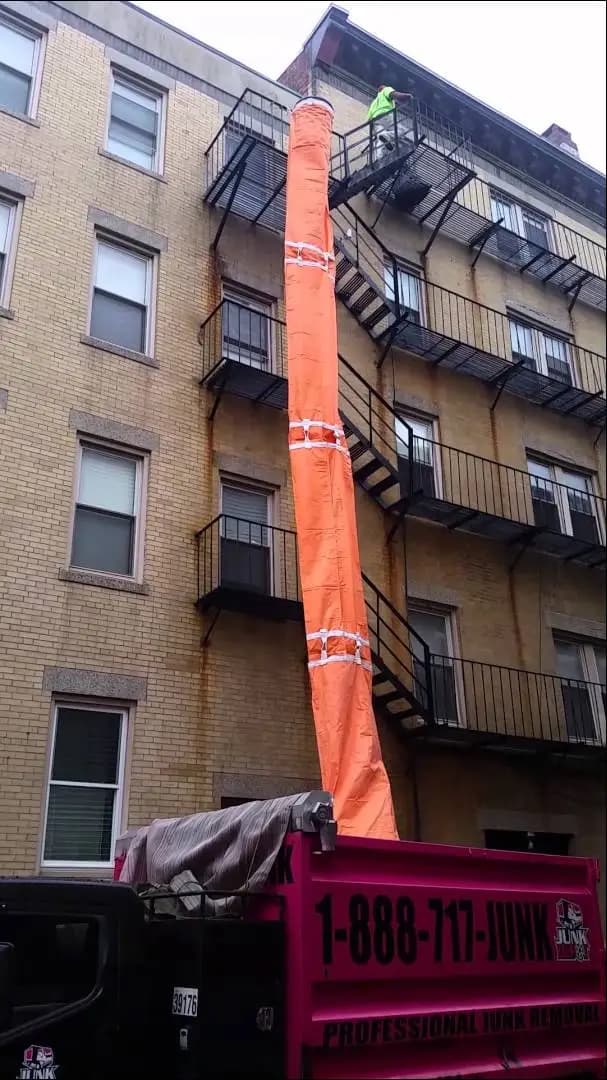
- Pick your anchor point. The chute hangs from a window opening, roof edge, scaffold rail, or fire escape. The four woven connection loops at the top of the chute give you secure attachment options without special hardware.
- Connect sections. Clip loop-to-loop with carabiners or quick-connects starting from the top and working down. Each joint overlaps 1.5 ft automatically.
- Set up a hopper. A standard 32-gallon commercial trash can with the bottom removed sits at the top of the chute and acts as a funnel. It catches loose material and directs it cleanly into the chute opening.
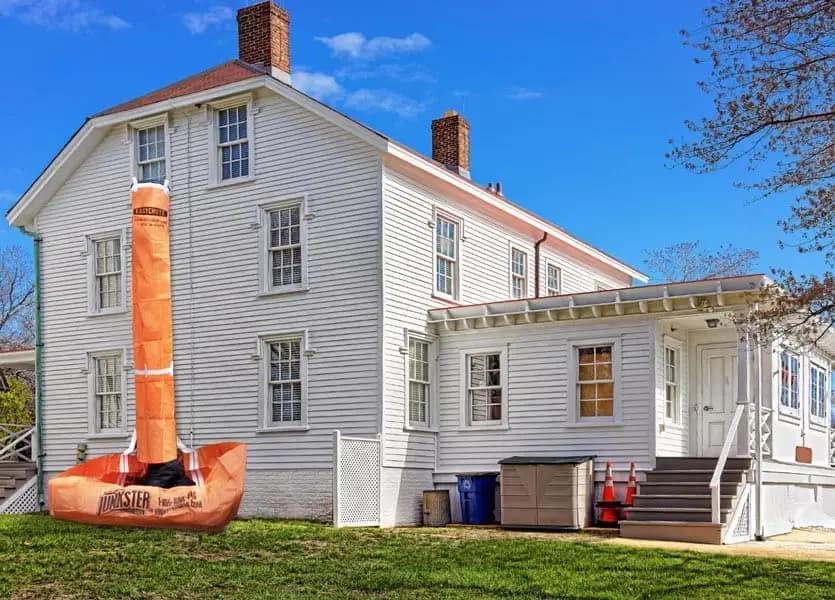
- Position your container. Place a dumpster or debris bin directly below the chute's discharge end. The 22-inch diameter exit drops material straight in.
- Adjust length if needed. Use the middle shortening straps to fine-tune the drop so the end of the chute sits just above the container rim.
Breakdown is just as fast. Unclip the sections, fold each one down, and you're loaded and gone.
Free Shipping to Maine Job Sites — Order Online Today
EasyChute ships free to job sites anywhere in Maine — Portland, Bangor, Lewiston, Augusta, Biddeford, Brunswick, and every rural address in between. There's no minimum order, no rental return deadline, and no depot to coordinate with. You order online at a fixed price and the chute comes to you.
Browse the full selection at our shop, or read through the FAQ if you have questions about section sizing before you order. You can also reach us by phone at 855-902-4883 (Mon–Fri, 8 AM–10 PM Eastern) or email orders@easychute.com. The contact page has all the details.
If you're weighing the cost of renting versus buying, see our breakdown on debris chute rental cost in Portland, Maine. Planning a whole-home renovation? Check out our guides on aging-in-place renovations in Maine and family renovation projects in Maine for more on how a chute fits into a longer project timeline.
Frequently asked questions
Does EasyChute ship to rural Maine addresses and not just major cities?
Yes. EasyChute ships free to any job site in the United States, including rural Maine addresses. Whether your project is in Portland, a coastal town on Penobscot Bay, or a remote inland location, your chute ships directly to you at no extra cost.
How many 10 ft sections do I need for a typical two-story Maine home?
Most two-story Maine homes run roughly 20 to 24 feet from the roof edge to the ground. Two 10 ft sections give you 20 feet of drop, and you can add a third for taller work. Alternatively, the 25 ft section covers two and a half stories in a single piece, which simplifies setup.
Can I use an EasyChute on an old plaster-and-lath demo job?
Yes. EasyChute is built for exactly that kind of work — plaster and lath, drywall, roofing shingles, wood scraps, and insulation are all listed debris types. The 22-inch diameter handles chunky plaster pieces, and the overlapping joints keep fine dust inside the chute rather than letting it escape at the connections.
What does the OSHA enclosed-chute rule mean for my Maine roofing job?
OSHA 29 CFR 1926.252(a) requires an enclosed chute whenever material is dropped more than 20 feet to any point outside a building's exterior walls. On a standard two-story or taller Maine home, that threshold is easy to hit. EasyChute meets or exceeds applicable OSHA regulations, so you're covered. For any local permit questions specific to your municipality, check with your local building department.
Can I reuse my EasyChute on multiple jobs?
Absolutely. EasyChute sections are designed to be reusable job after job. The tear-resistant woven, coated poly fabric holds up through repeated use, and the sections fold down small enough to store in your truck or shop between projects. There's no per-job rental fee — you own it outright.
Nearby states
Related guides
- Debris Chute Rental Cost Estimate for Portland, Maine: 2026 Complete Pricing & Budget Guide
- Debris Chute Setup for Aging-in-Place Renovations in Maine: 2026 Complete Contractor Guide
- Debris Chute Setup for Family Renovations in Maine: 2026 Contractor Guide
- Debris Chute Setup for Pet-Friendly Renovations in Maine Neighborhoods: 2026 Contractor Guide