
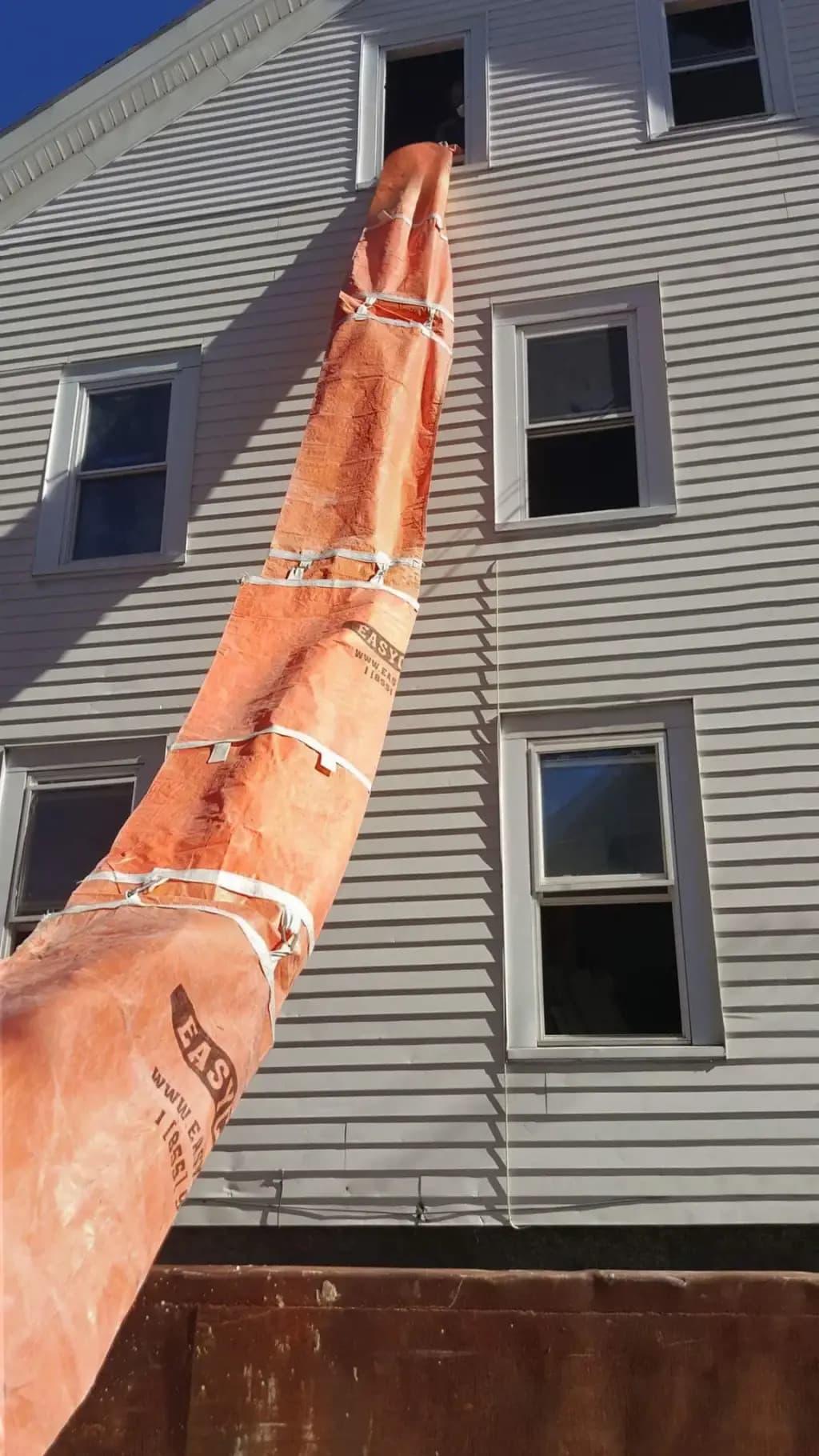
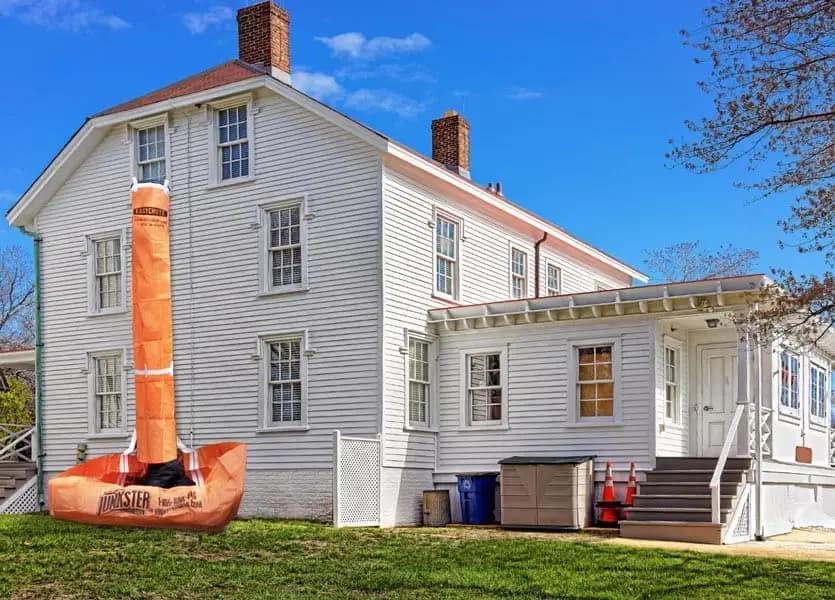
Whether you're tearing off a roof in Baton Rouge, gutting a shotgun house in New Orleans, or demoing a commercial build in Shreveport, a trash chute in Louisiana keeps your crew moving and your job site clean. Instead of tossing drywall, shingles, and plaster over the side and hoping for the best, you hang a fabric debris chute from a window or roof edge and let gravity do the work — safely and in one controlled stream.
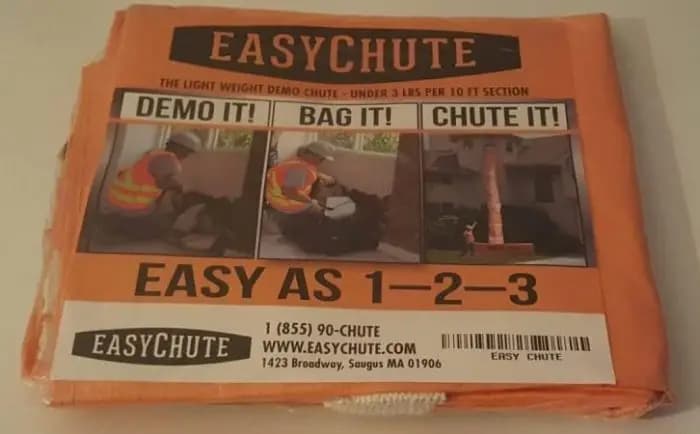
EasyChute ships trash chutes free to job sites anywhere in Louisiana. Our chutes are made from woven, coated poly fabric, weigh just a few pounds per section, and fold down small enough to stow in a truck cab between jobs. Order online at fixed prices — no quotes, no rental counters, no waiting on a local supplier. Just pick your sections, check out, and get to work.
Trash chutes shipped free to Louisiana
Free shipping on every order. See the full shop.

Why Louisiana Crews Rely on a Fabric Trash Chute
Louisiana's building stock is as varied as its geography. New Orleans is dense with historic shotgun houses, double-shotguns, and Creole cottages — older structures loaded with plaster and lath, heart-pine flooring, and decades of layered roofing. Baton Rouge mixes post-war ranch homes with mid-rise office and retail. Lafayette and Lake Charles carry a heavy mix of residential remodels and storm-related rebuild work. Shreveport and Monroe serve a steady stream of commercial and light-industrial renovation projects.
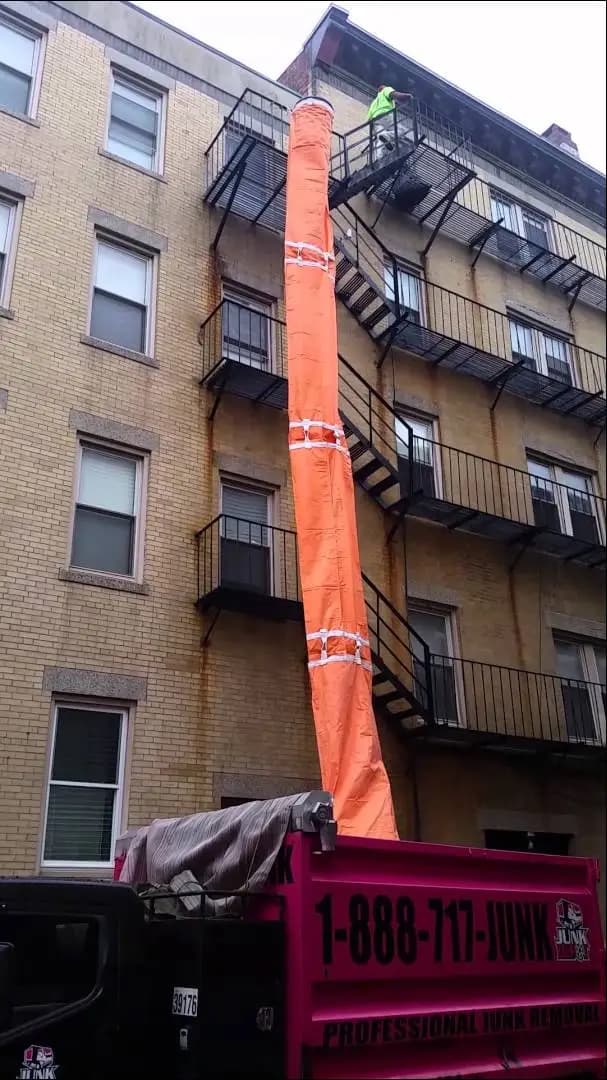
Across all of these, the challenge is the same: debris has to come down from upper floors or roof level without scattering across landscaping, neighboring properties, sidewalks, or the workers below. A construction trash chute solves that in one move. You hang it, you fill it, debris funnels into a dumpster or trash can at the bottom, and the site stays controlled all day.
Louisiana also sees a lot of storm-repair and insurance-driven work — reroof jobs, flood-damaged interior gut-outs, siding and window replacements. These projects generate high volumes of debris fast, and a debris chute is one of the most straightforward ways to keep that volume moving without slowing your crew down.
The OSHA 20-Foot Rule Every Louisiana Contractor Needs to Know
OSHA 29 CFR 1926.252(a) requires that when material is dropped more than 20 feet to any point outside the exterior walls of a building, an enclosed chute must be used. On a two-story or taller structure — very common in New Orleans' historic districts and Baton Rouge's older neighborhoods — that threshold gets crossed quickly. EasyChute meets or exceeds applicable OSHA regulations, so using our chutes puts you on the right side of that requirement. If you have questions about specific permit or safety requirements for your parish or municipality, check with your local building department.
Choosing the Right Trash Chute Sections for Louisiana Building Heights
EasyChute sections come in three lengths, and mixing them lets you match the chute to the job without buying more than you need.
- 10 ft section — roughly one story. Weighs under 3 lbs and fits in a drawer or small box. The Lite-Duty 10 ft section ($99) handles standard interior renovation debris. The Heavy-Duty 10 ft section ($149) is the better call for roofing shingles, concrete chunks, and heavy demo loads.
- 25 ft section — about two and a half stories. The EasyChute 25 ft section ($277) covers most two-story residential work and multi-family buildings, which are everywhere in New Orleans and Baton Rouge.
- 50 ft section — roughly five stories. The EasyChute 50 ft section ($596) is built for commercial mid-rise work, taller apartment buildings, or any job where the debris has a long way to fall.
Sections connect loop-to-loop using carabiners or quick-connects. Every joint overlaps 1.5 feet to keep dust and debris contained inside the chute — not blowing back onto the building or your crew. Middle shortening straps let you fine-tune the length without cutting anything. The chute's 22-inch diameter handles a steady stream of mixed construction debris without clogging.
Setting Up Your Chute on a Louisiana Job Site
Setup takes minutes and requires no outriggers, hoists, frames, or extra crew. Here's how a typical install goes:
- Position your container. A standard 32-gallon commercial trash can with the bottom removed works well as a hopper at the top of the chute. Place your dumpster or collection bin at the ground-level exit point.
- Hang the top section. Use the four woven connection loops at the top of the first section to hang the chute from a window frame, roof edge, scaffold rail, or fire escape. No special hardware beyond basic rigging.
- Add sections as needed. Connect additional sections using carabiners or quick-connects, loop-to-loop, making sure each joint overlaps by at least 1.5 feet.
- Adjust the length. Use the middle shortening straps to dial in the length so the chute's exit is positioned correctly over your dumpster.
- Load and work. Feed debris steadily into the hopper. Avoid jamming large rigid pieces; break them down first if needed.
After the job, fold the sections flat, stow them in your truck or trailer, and they're ready for the next site. A 10 ft section weighs under 3 lbs; a 25 ft section under 8 lbs; a 50 ft section under 15 lbs — easy for one person to handle.
Working Through Louisiana's Climate on the Job Site
Louisiana is hot and humid most of the year, with heavy rain common from spring through fall and an active hurricane season that keeps storm-repair contractors busy for months at a stretch. When you're working in those conditions, you want equipment that's simple to set up and easy to move if weather changes on you mid-job.
EasyChute's woven, coated poly fabric and lightweight design mean the chute goes up fast and comes down just as fast if you need to pause for a storm. For tips on keeping your chute in good working order through wet, humid conditions, see our guide on humid-weather trash chute maintenance for New Orleans and the Gulf Coast.
Order a Trash Chute Shipped Free to Your Louisiana Job Site
EasyChute ships every order free to job sites anywhere in Louisiana — New Orleans, Baton Rouge, Shreveport, Lafayette, Lake Charles, Metairie, Alexandria, and everywhere in between. Prices are fixed and posted online. No quotes, no negotiating, no rental fees.
Browse the full lineup at our shop and pick the sections that fit your building height and debris type. If you have questions before you order, call us at 855-902-4883 (Mon–Fri, 8 AM–10 PM Eastern) or email orders@easychute.com. We're happy to help you choose the right configuration for your job.
Frequently asked questions
Does EasyChute ship trash chutes to Louisiana?
Yes. EasyChute ships free to job sites anywhere in Louisiana, including New Orleans, Baton Rouge, Shreveport, Lafayette, and Lake Charles. Every order ships at no additional cost, regardless of location within the United States.
Which section length do I need for a two-story house in Louisiana?
For a typical two-story residential structure, the 25 ft section ($277) is a natural fit — it covers roughly two and a half stories. If you need more reach, sections connect together with carabiners so you can add a 10 ft section to extend the chute as needed.
Is EasyChute's debris chute compliant with OSHA requirements?
EasyChute meets or exceeds applicable OSHA regulations, including the requirement under 29 CFR 1926.252(a) that an enclosed chute must be used when dropping material more than 20 feet outside a building's exterior walls. Always check with your local building department for any additional parish or municipal requirements.
Can I use an EasyChute trash chute for roofing jobs in Louisiana?
Absolutely. The Heavy-Duty 10 ft section ($149) is designed to handle heavier debris like asphalt shingles, which are common on Louisiana residential and commercial roofs. You can connect multiple sections to match the height of the structure.
How do I store and reuse an EasyChute between jobs?
Each section folds flat and packs small — a 10 ft section fits in a drawer or small box and weighs under 3 lbs. After each job, fold the sections, stow them in your truck or trailer, and they're ready for your next Louisiana job site.