

Index
- Base Rental Rates for Springfield, MA
- Section Size & Height Impact on Cost
- Duration, Discounts & Volume Pricing
- Hidden Costs & Permit Fees to Budget
- Delivery, Pickup & Transportation
- Seasonal Demand & Springfield Market Shifts
- Insurance, Liability & Contractor Protection
- Modular vs. Traditional: Cost Comparison
- Rental vs. Purchase: When to Buy
- Step-by-Step Budgeting Workflow
- Local Notes: Springfield, MA Resources
- Frequently Asked Questions
- Get Your Springfield Estimate
Base Rental Rates for Springfield, MA
Springfield, MA debris chute rental costs in 2026 range from $400–$650 per week for standard modular systems, depending on chute height, section count, and contractor volume. Weekly rental is the most common billing model in the Springfield market, with daily rates averaging $85–$135 per day.
For a typical renovation involving 2–4 floors, expect a base system rental of $500–$550/week. Multi-story demolition projects on taller structures command premium rates, starting at $650+/week. These baseline figures assume standard delivery to Springfield proper; jobs in outlying areas (East Longmeadow, Enfield) may incur additional logistics fees.
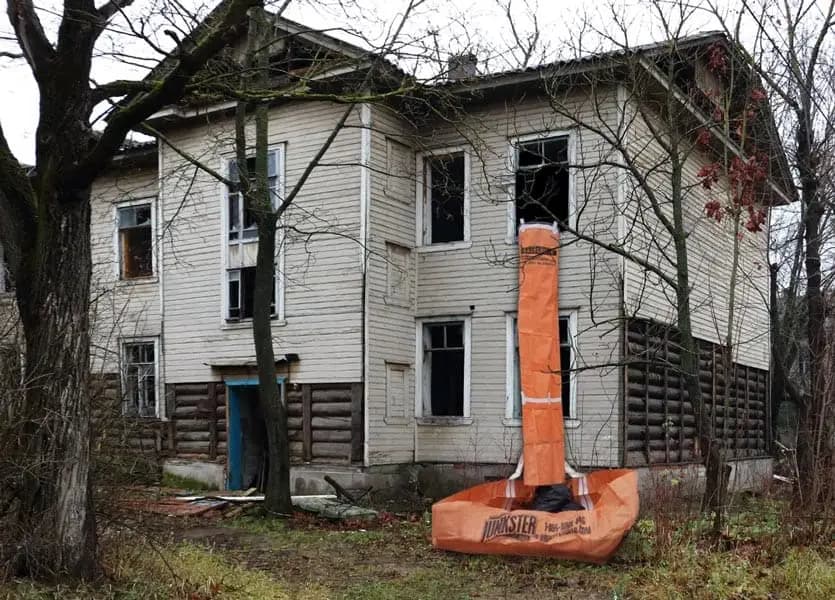
- Daily rental: $85–$135/day (suitable for 5–7 day jobs)
- Weekly rental: $400–$650/week (most cost-effective for 2–4 week projects)
- Monthly rental: $1,400–$2,200/month (best rate per day for projects 4+ weeks)
- Premium add-ons: Extra sections, high-rise rigging, express delivery +$75–$300
See the Worcester, MA pricing guide for a comparison with nearby markets — similar rates apply to Springfield with minor regional adjustments.
Section Size & Height Impact on Cost
Chute section size directly affects rental cost. The most common configuration in Springfield is the 18″ diameter 4-section system, covering approximately 40–50 feet of vertical drop. Larger-diameter chutes (24″ or 30″) and additional sections increase pricing proportionally.
- 4-section 18″ system (40–50 ft): $450–$550/week — residential remodels, modest multi-story jobs
- 6-section 18″ system (60–75 ft): $600–$750/week — medium commercial, mid-rise demolition
- 24″ diameter system (any height): +15–25% premium over 18″ standard
- 30″ industrial system: +40–60% premium; high-volume demolition, specialized projects
- Extra sections (1–2): +$75–$150 per section per week
For Springfield multi-story projects, contractors typically rent a 6-section system to handle 60–75 feet of vertical clearance. See the section-size pricing breakdown for detailed configuration cost matrices.
Duration, Discounts & Volume Pricing
Rental duration significantly influences total cost per day. Contractors who commit to longer rental periods lock in better per-day rates, especially on multi-project arrangements.
- 1–2 days: No discount; full daily rate applies
- 3–6 days: 5–8% discount off daily rate
- 1 week (7 days): 12–18% discount vs. daily pricing
- 2–3 weeks: 18–25% cumulative discount
- 4+ weeks (monthly): 30–40% cumulative discount; best value
- Seasonal (winter) contracts: 10–15% off monthly rates (Nov–Mar)
- Multi-job discounts: 5–10% for contractors renting 2+ systems simultaneously
Example: A contractor budgeting a 3-week renovation in Springfield would pay approximately $1,800–$2,100 for a 6-section 18″ system, a savings of $300–$400 compared to three separate week-long rentals.
Hidden Costs & Permit Fees to Budget
Beyond the headline rental rate, Springfield projects often carry additional charges that inflate final invoices. Understanding these upfront prevents budget surprises.
- Springfield building permit/approval: $100–$300 (varies by neighborhood zoning, Building & Zoning Department processing time)
- Setup & rigging labor: $150–$400 (if contracted through rental company; many contractors self-install)
- Removal/takedown labor: $100–$250
- Delivery fee (if outside standard zone): $75–$200
- Pickup fee: $50–$150
- Damage waiver/insurance coverage: $50–$150/week
- Dumpster rental (separate): $300–$500/week (not included in chute cost)
- Safety signage, cones, ground protection: $50–$200 (contractor responsibility)
- Extended rental (overage days beyond scheduled return): Pro-rated daily rate + 20–30% penalty
The hidden costs guide dives deeper into mitigation strategies and cost-avoidance tactics.
Delivery, Pickup & Transportation
Logistics make up a significant portion of Springfield-area debris chute projects. Most rental companies include standard delivery within the greater Springfield zone; outlying areas and rush delivery incur premiums.
- Standard delivery (Springfield metro, 1–2 days notice): $0–$50 (often included for 2+ week rentals)
- Express/next-day delivery: $150–$300
- Delivery to East Longmeadow, Enfield, or surrounding towns: +$75–$150
- Pickup (included with standard rental): $0; schedule 5–7 days post-completion
- Rush pickup (within 24 hours): +$100–$200
- Weekend delivery/pickup: +$75–$150
Plan delivery timing carefully: delays on-site tie up the chute longer, extending rental weeks unnecessarily. Coordinate with your general contractor and dumpster service to optimize logistics.
Seasonal Demand & Springfield Market Shifts
Springfield renovation and demolition activity peaks in spring and summer, pushing debris chute rental demand—and prices—upward. Winter months offer lower rates but bring weather complications.
- Spring (April–May): Peak demand; rates 15–25% higher; 2–3 week lead times common
- Summer (June–August): High demand; sustained premium pricing; book 2+ weeks ahead
- Fall (September–October): Moderate demand; rates stable to slightly reduced; good booking window
- Winter (November–March): Lowest demand; 10–20% discounts; faster delivery; weather risks (ice, snow) increase complexity
For Springfield projects launching in Q2 or Q3 2026, secure your chute reservation 3–4 weeks in advance to lock standard rates and guarantee availability.
Insurance, Liability & Contractor Protection
Debris chutes introduce liability and safety compliance obligations. Rental agreements typically shift responsibility to the contractor; confirm your general liability policy covers chute operation. Springfield’s local safety environment emphasizes compliance with OSHA construction safety standards.
- Contractor liability insurance requirement: $1M–$2M general liability minimum; confirm your policy explicitly covers debris chute use
- Damage waiver add-on: $50–$150/week; protects against rental-company damage claims (recommended)
- On-site safety signage & barriers: Contractor provides; budget $50–$200
- Spotter/safety monitor labor (optional but recommended for high-traffic sites): $50–$100/day
- Workers’ compensation implications: Ensure all workers operating the chute are covered; document training
Review the insurance requirements guide for a full compliance checklist.
Modular vs. Traditional: Cost Comparison
Modern modular debris chutes (EasyChute standard) cost 5–15% more per week than older canvas-tube or rigid-pipe systems but offer faster setup, higher durability, and better safety. For Springfield projects, modular rental is increasingly the default standard.
- Modular polyethylene chute (18″, 6-section): $600–$750/week; fast 30-min setup; reusable, minimal maintenance
- Traditional canvas-tube chute (same size): $500–$650/week; 60–90 min setup; requires annual inspection; prone to wear
- Rigid steel chute (high-rise only): $1,200–$1,800/week; permanent installation; multi-year contracts only
Modular systems deliver faster ROI through reduced labor (setup/takedown), durability across projects, and contractor preference in Springfield’s competitive market. See the modular vs. traditional comparison guide for a detailed feature analysis.
Rental vs. Purchase: When to Buy
Contractors running 4+ renovation projects per year should evaluate purchase vs. rental. A typical modular chute system costs $3,500–$6,000 to buy; rental annual spend often exceeds that threshold.
- Annual rental spend threshold: 2 × $500/week × 12 months ÷ 2 projects = ~$6,000/year; purchase becomes competitive
- Purchase cost (new system, 4–6 sections): $3,500–$6,000 one-time; add storage/maintenance
- ROI break-even: 10–15 projects (depends on rental frequency and project duration)
- Purchase advantages: No delivery fees, instant availability, zero damage-waiver costs, tax deductions
- Purchase disadvantages: Upfront capital, storage space, repair/replacement costs (typically $300–$800/year)
Use the rental vs. purchase ROI calculator to model your specific project pipeline and determine the optimal strategy for your Springfield-based operation.
Step-by-Step Budgeting Workflow
Create an accurate debris chute cost estimate by systematically working through this checklist, which mirrors best practices documented in our step-by-step setup workflow.
- Define project scope: Confirm building height (# floors), total renovation/demolition duration (days/weeks), and estimated debris volume (tons).
- Select chute configuration: Choose section count and diameter based on height and volume. Most Springfield projects use 18″ 4–6 section standard.
- Calculate base rental: Map your duration (daily, weekly, monthly) to the baseline rates ($400–$650/week for 6-section). Apply any volume/commitment discounts.
- Add delivery & logistics: $75–$200 for standard delivery unless included in 2+ week package. Factor pickup timing.
- Budget permits & compliance: +$100–$300 for Springfield building approval, safety signage, and liability coverage.
- Allocate dumpster service: Separate from chute; typically $300–$500/week for Springfield area. Coordinate hand-off with your disposal partner.
- Set aside contingency: Add 10–15% buffer for overage days, weather delays, or scope changes.
- Document insurance & safety: Confirm your liability coverage and schedule any required safety training before equipment arrival.
Local Notes: Springfield, MA Resources
Springfield contractors should reference local government resources for permit, zoning, and safety compliance. The City of Springfield’s Building and Zoning Department oversees debris chute permits and on-site construction safety.
- Springfield Building & Zoning Department: Debris chute permit applications, zoning verification for job sites. Contact via Springfield, MA official website for submission and fee schedules.
- Massachusetts Environmental Protection Agency: Construction debris recycling requirements; refer to EPA construction and demolition debris data for diversion goals (currently 85%+ in Massachusetts).
- OSHA Massachusetts Area Office: On-site safety compliance and worker ergonomics; see OSHA ergonomics guidelines for safe loading practices.
- Waste Disposal Partners in Springfield Area: Confirm your dumpster vendor is licensed and insured; coordinate pickup schedules with chute delivery to avoid site conflicts.
Nearby regional guides: Nashua, NH rental costs, Rhode Island setup checklist.
Frequently Asked Questions
What is the average debris chute rental cost for a 2-week Springfield renovation?
For a typical 2-week residential renovation in Springfield using a 6-section 18″ modular system, expect a base rental cost of $1,000–$1,300 ($500–$650/week × 2 weeks). Add delivery ($75–$150), permits ($100–$300), and damage waiver ($100–$300), bringing total to approximately $1,275–$2,050. Many contractors also budget separately for the dumpster rental ($600–$1,000 for 2 weeks).
Do I have to rent a dumpster separately, or does the chute rental include it?
Debris chutes and dumpsters are separate services with different vendors and cost streams. The chute is the delivery system; the dumpster is the collection container. You’ll contract and pay for both. Dumpster rental in Springfield typically runs $300–$500/week and is based on capacity (10–30 yards). Coordinate delivery/pickup timing with your chute rental to ensure smooth debris flow.
What happens if my project runs longer than planned—am I charged extra?
Yes. Most rental agreements charge a pro-rated daily overage rate for each day beyond your scheduled return date, typically at 120–130% of the standard daily rate. A 1-week extension might cost an extra $175–$225 (depending on your base rate). To minimize overages, build a 3–5 day buffer into your project timeline and communicate early with your rental provider if delays occur.
Are there any weather restrictions for using a debris chute in Springfield?
Modular chutes can operate in most weather, but high winds (40+ mph) and heavy snow/ice create safety hazards and may require temporary shutdown. Winter projects require extra caution: ensure ground-level debris does not freeze into the dumpster, and inspect chute joints for ice buildup. Most contractors pause chute operation during severe weather and adjust timelines accordingly. Winter rental discounts (10–15%) help offset weather delays.
What is included in the rental cost, and what am I responsible for as the contractor?
The rental includes the chute system, delivery, and pickup. You are responsible for: site access and safety setup, ground-level safety barriers and signage, operator training, dumpster coordination, permits, and liability insurance. The rental company typically handles installation labor (for a fee) but many contractors self-install to save costs. Review your contract carefully to confirm what’s covered.
Can I rent a debris chute for a single-day job?
Yes, but daily rental rates are significantly higher than weekly rates. A single-day rental in Springfield costs $85–$135, while spreading the chute over a full week (7 days) costs only $400–$650 per week—a much better per-day value. If your job is fewer than 3 days, daily rental makes sense; beyond that, negotiate a short weekly rate. Many rental companies offer flexibility for contractors in a crunch.
Do I need special insurance to rent a debris chute?
Your existing general liability insurance (most contractors carry $1M–$2M) should cover chute operation if you explicitly notify your broker that you use debris chutes. Request a certificate of insurance naming the chute rental company as an additional insured, if they ask. Some rental agreements offer optional damage waivers ($50–$150/week) if you prefer to avoid direct liability for chute damage. Review your policy and clarify with your insurer before job start.
Get Your Springfield Estimate
Accurate debris chute pricing depends on your unique project scope: building height, duration, section count, and local logistics. Rather than guessing, contractors should request a site-specific estimate from an experienced local vendor familiar with Springfield zoning and safety requirements.
Use the modular trash chute cost calculator to generate a preliminary budget based on your project details. For renovation contractors evaluating long-term strategy, the rental vs. purchase ROI guide helps determine whether ownership or recurring rental fits your operation.
Ensure your final estimate includes all fees—permits, delivery, insurance, dumpster service, and contingency—to avoid mid-project surprises. Contact your local Springfield building authority early in the planning phase to confirm chute placement, signage, and traffic impact requirements. Ready to move forward? Reach out today to lock in your Springfield debris chute rental for your next project.