
Whether you're stripping a roof in Charlotte, gutting a historic bungalow in Raleigh, or renovating a beachside rental near Wilmington, a trash chute in North Carolina is one of the fastest ways to move demolition debris from upper floors straight into a waiting dumpster — without bucket brigades, stairwell damage, or OSHA violations. EasyChute ships its lightweight, reusable debris chutes free to job sites anywhere in the state, so you can order today and have the right chute waiting when work begins.
This page walks North Carolina contractors, roofers, property managers, and homeowners through everything they need to know: which chute length fits which building type, how to handle the state's mix of climates and project seasons, how the OSHA enclosed-chute rule applies to taller drops, and how to get set up in about thirty minutes on site.
Trash chutes shipped free to North Carolina
Free shipping on every order. See the full shop.
Why North Carolina Crews Rely on a Fabric Debris Chute
North Carolina's construction landscape is genuinely varied. The Research Triangle — Raleigh, Durham, and Chapel Hill — has seen a sustained wave of apartment construction and office renovation. Charlotte's Uptown and surrounding neighborhoods are full of mid-rise multifamily buildings undergoing gut rehabs. Asheville and the western mountain towns have older craftsman and Victorian stock that constantly needs plaster, lath, and original-material tearouts. Coastal markets like Wilmington and the Outer Banks see heavy roofing turnover from storm seasons year after year.
Across all of those project types, the problem is the same: debris on an upper floor has to reach the ground safely and quickly. Carrying heavy loads of drywall chunks or old shingles down a stairwell is slow, hard on the building's finishes, and risky for workers. Tossing material out a window is a safety hazard — and, as covered below, illegal above a certain drop height. A fabric trash chute solves both problems. It channels debris in a controlled path, keeps dust contained at each joint, and can be set up and taken down by one or two people without any special tools.
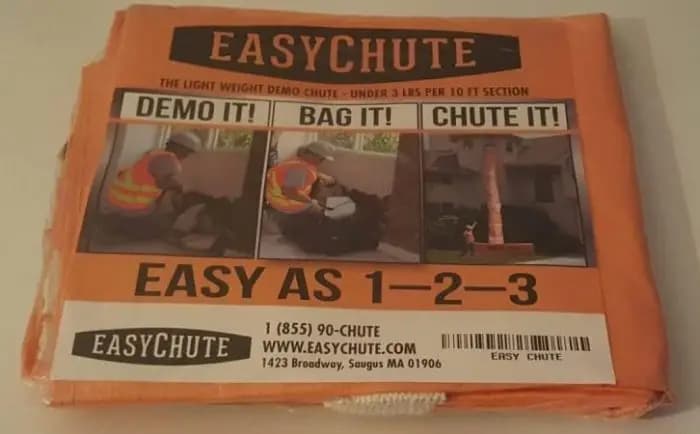
EasyChute's chutes are made from woven, coated poly fabric that is tear-resistant and built to handle the everyday abuse of construction debris: broken drywall, roofing shingles, plaster chunks, wood scraps, and insulation batts. The 22-inch diameter opening is wide enough to handle bulky pieces without constant unclogging. And because sections fold down small — a 10-foot section weighs under 3 lbs and fits in a drawer — you can keep a chute kit in your truck and move it from job to job all season long.
Choosing the Right Chute Length for North Carolina Buildings
EasyChute sections are sized to match real-world building heights, which makes it easy to spec the right kit before you show up on site.
- 10-foot section (≈ one story): The EasyChute Lite-Duty 10 ft Section ($99) is a smart starting point for single-story additions, low-slope roofs, or interior tearouts where you're dropping material from a first- or second-floor window. The Heavy-Duty 10 ft Section ($149) handles the same height with heavier daily loads — good for roofing shingles or dense plaster.
- 25-foot section (≈ two and a half stories): The EasyChute 25 ft Section ($277) covers two- and three-story residential and light commercial work — the kind of older in-fill housing common in Durham's Walltown neighborhood or the craftsman bungalows throughout Greensboro and Winston-Salem.
- 50-foot section (≈ five stories): The EasyChute 50 ft Section ($596) is built for mid-rise multifamily renovation, commercial interior demolition, or stacked additions. Charlotte's Uptown apartment buildings and the growing mixed-use projects around Raleigh's downtown are exactly the settings where a 50-foot run earns its keep.
Sections connect loop-to-loop using carabiners or quick-connects, and every joint overlaps 1.5 feet to keep dust and debris inside the chute rather than escaping at the seams. If you need an in-between length, the middle shortening straps let you dial in the exact drop. See the FAQ for more on connecting and adjusting sections.
The OSHA Enclosed-Chute Rule — What North Carolina Contractors Need to Know
OSHA 29 CFR 1926.252(a) is straightforward: when material is dropped more than 20 feet to any point outside the exterior walls of a building, an enclosed chute must be used. That threshold is easy to hit in real-world work. Three stories of Charlotte row houses, a four-story apartment gut-job in Raleigh, a five-story commercial building anywhere in the state — all of those drops require an enclosed chute by federal law.
EasyChute meets or exceeds applicable OSHA regulations. Every joint in the system overlaps 1.5 feet and the woven, coated fabric keeps material contained from the discharge point at the top all the way to the dumpster below. If your site foreman or safety officer has questions about compliance, the specs are all in the FAQ and on the product pages. For site-specific permit or safety plan requirements, always check with your local building department — rules can vary by municipality across North Carolina.
Working Through North Carolina's Climate
North Carolina's weather runs the full range depending on where you are and when you're working. The Piedmont — Raleigh, Durham, Greensboro, Charlotte — gets hot, humid summers and mild winters with occasional ice storms. The mountains around Asheville get genuine winter snowfall. The coastal plain, from Fayetteville down to Wilmington, deals with high heat and hurricane-season moisture.
The practical takeaway for debris chute use: plan your work schedule around the conditions that affect your crew's safety and efficiency, not around any particular feature of the chute itself. EasyChute's fabric is tear-resistant and designed for the jobsite environment. Store the chute folded in your truck or a job-site box when it's not in use, and you'll be ready to deploy it whatever the season brings.
Setting Up Your Trash Chute on a North Carolina Job Site
Setup is straightforward enough that one person can do it, though two makes it faster on taller drops.
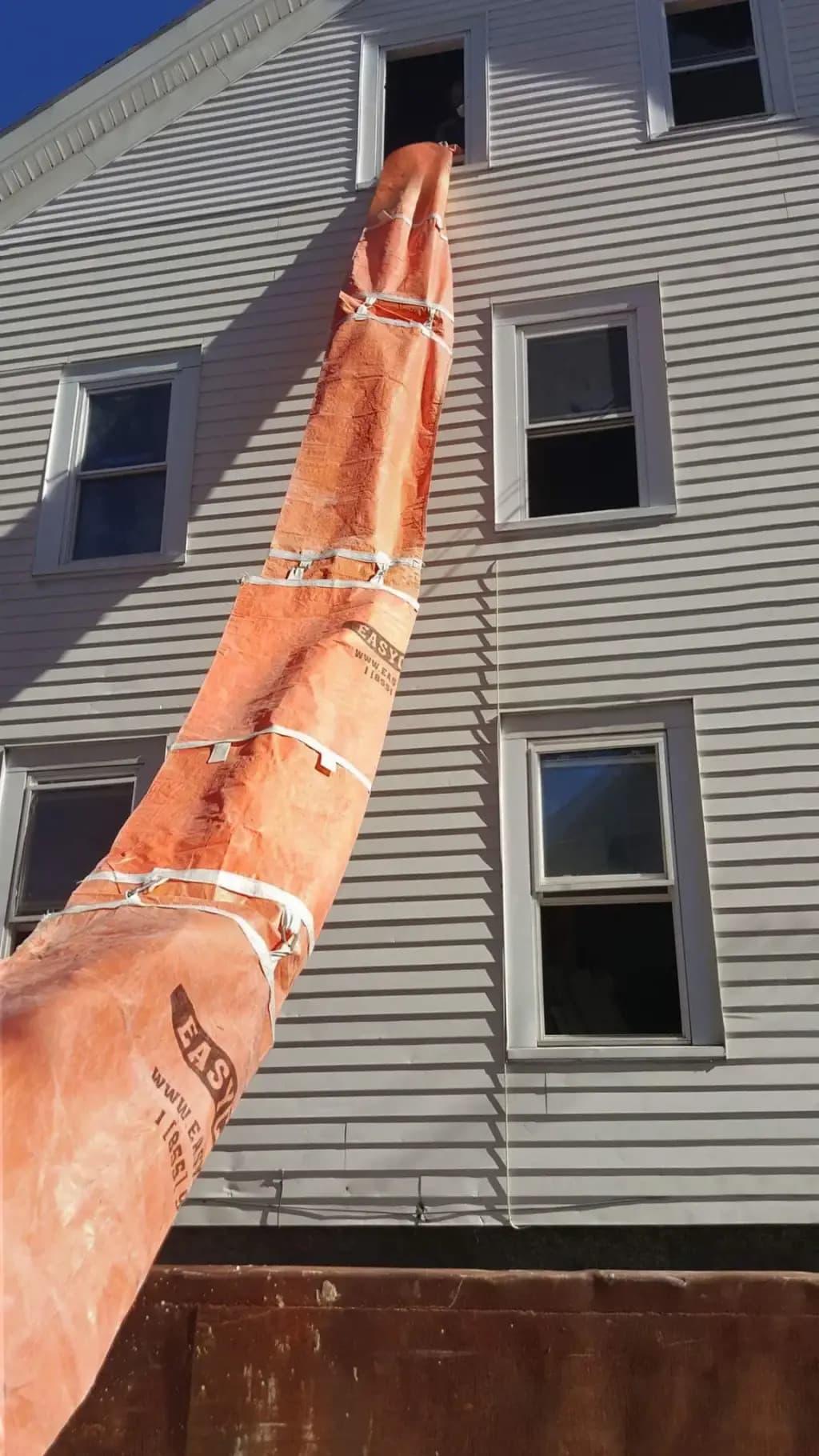
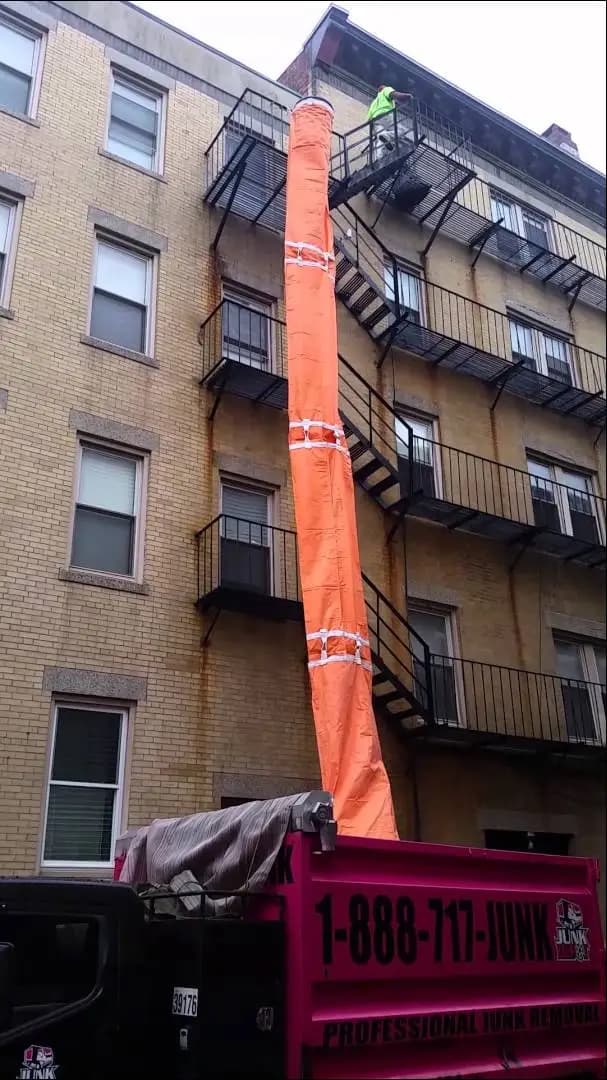
- Rig the top anchor. The chute hangs from a window frame, roof edge, scaffold rail, or fire escape using the four woven connection loops at the top. No outriggers, frames, or rented hoisting equipment required.
- Add a hopper. A standard 32-gallon commercial trash can with the bottom removed fits over the top of the chute and acts as a hopper, making it easy for workers to toss debris in without missing the opening.
- Connect additional sections if needed. Loop the bottom connection loops of the upper section to the top loops of the next section with carabiners. The 1.5-foot overlap handles the rest.
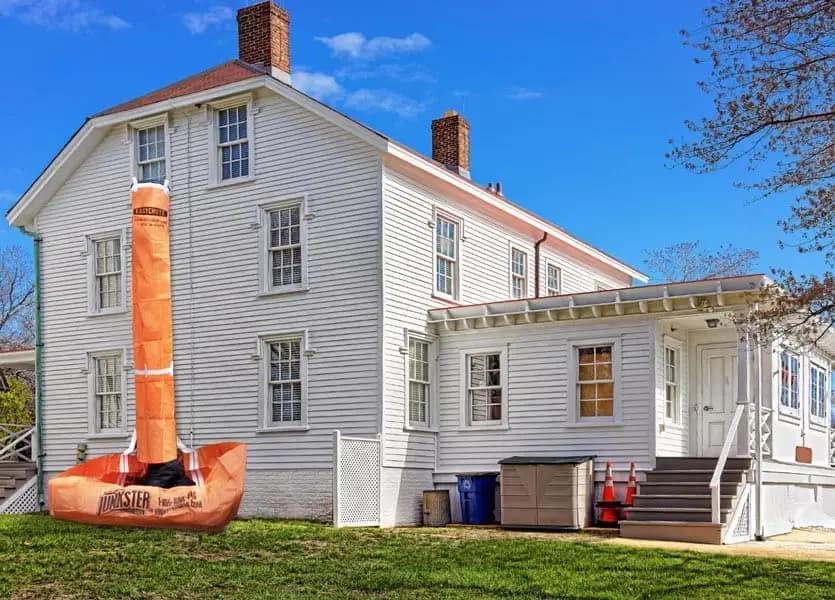
- Position your dumpster. Set the receiving dumpster directly below the chute's discharge end. On tight urban lots in downtown Raleigh or Charlotte, confirm your dumpster permit and placement with the city before the job starts.
- Adjust for exact height. Use the middle shortening straps to fine-tune the drop so the bottom of the chute clears the dumpster opening cleanly.
For multi-family renovation setups common in Charlotte, see the detailed walkthrough at /multi-family-debris-chute-setup-charlotte. Raleigh-Durham crews comparing debris chute options can also visit /debris-chute-vs-trash-chute-raleigh-durham.
Order Your Trash Chute with Free Shipping to North Carolina
Every EasyChute order ships free to job sites anywhere in North Carolina — Asheville, Charlotte, Raleigh, Durham, Greensboro, Winston-Salem, Fayetteville, Wilmington, or any smaller town in between. Prices are fixed and listed clearly on each product page. No quotes, no negotiations, no surprise freight charges at checkout.
Browse the full lineup at /shop, or go straight to the section that fits your building height. Questions before you order? Call 855-902-4883, Monday through Friday, 8 AM to 10 PM Eastern, or email orders@easychute.com. You can also reach the team through the contact page.
Frequently asked questions
Does EasyChute ship trash chutes to job sites anywhere in North Carolina?
Yes. EasyChute ships free to job sites anywhere in the United States, including every city and county in North Carolina — from Charlotte and Raleigh to Asheville and Wilmington. There are no freight surcharges and no minimum order.
Which chute section is right for a two- or three-story house renovation in North Carolina?
The 25-foot section (approximately two and a half stories) is the most common choice for that height range. If your drop is closer to one story, a single 10-foot section — either Lite-Duty or Heavy-Duty — will do the job. You can also connect multiple 10-foot sections to reach the right length.
When does North Carolina law require an enclosed trash chute on a job site?
The federal OSHA standard (29 CFR 1926.252(a)) requires an enclosed chute whenever material is dropped more than 20 feet to any point outside the exterior walls of a building. EasyChute meets or exceeds applicable OSHA regulations. For site-specific permit requirements, check with your local North Carolina building department.
Can one person set up the chute on a North Carolina job site?
Yes — the chute is lightweight enough for a single worker to handle. A 10-foot section weighs under 3 lbs, a 25-foot section under 8 lbs, and a 50-foot section under 15 lbs. The chute hangs from a window, roof edge, or scaffold using its built-in connection loops, with no special tools or rental equipment needed. Two people makes it faster on taller drops.
Can EasyChute sections be reused from job to job across North Carolina?
Absolutely. EasyChute sections are designed to be reused repeatedly. Each section folds down small — a 10-foot section fits in a drawer or small box — so you can store it in your truck and move it to the next job site when the current one wraps up.