
If you're hauling drywall, shingles, or demo debris off a roof or upper floor on a Michigan job site, a trash chute is the safest and cleanest way to move that material to a dumpster on the ground. EasyChute ships fabric debris chutes free to job sites across Michigan — from Detroit and Grand Rapids to Traverse City, Kalamazoo, and every town in between — so you can order online today and get to work without hunting down a local rental.
This page covers what Michigan contractors, roofers, and remodelers need to know before they buy: which chute length fits common building heights in the state, how to set up the chute quickly on a two- or three-story house or a mid-rise commercial building, and why federal OSHA rules require an enclosed chute once debris is dropping more than 20 feet outside a building's exterior walls. Whether you're gutting a century-old brick flat in Detroit or tearing off a shingle roof on a Grand Rapids bungalow, EasyChute has a section that fits the job.
Trash chutes shipped free to Michigan
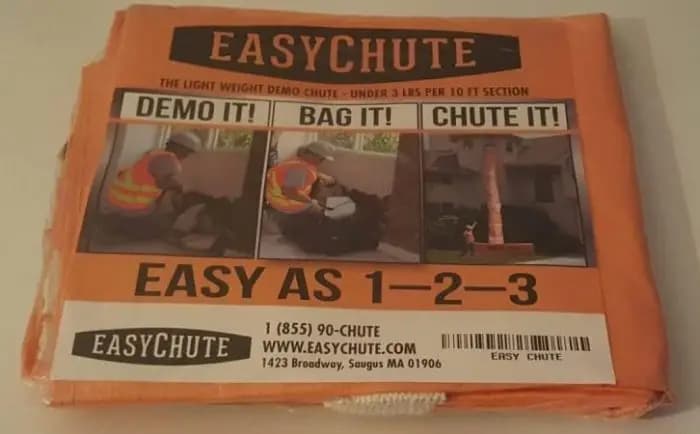

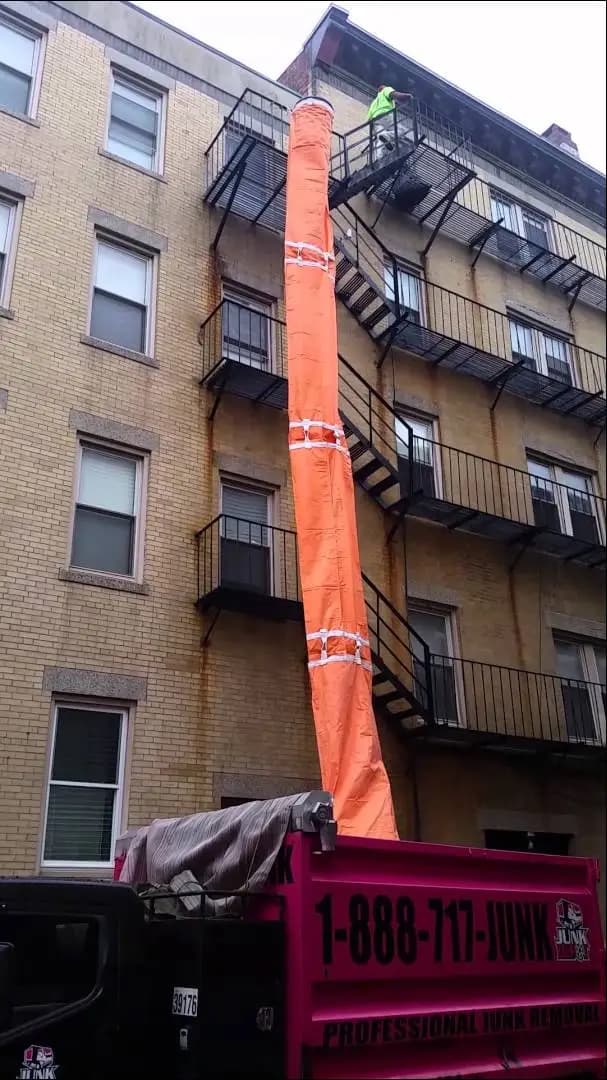
Free shipping on every order. See the full shop.
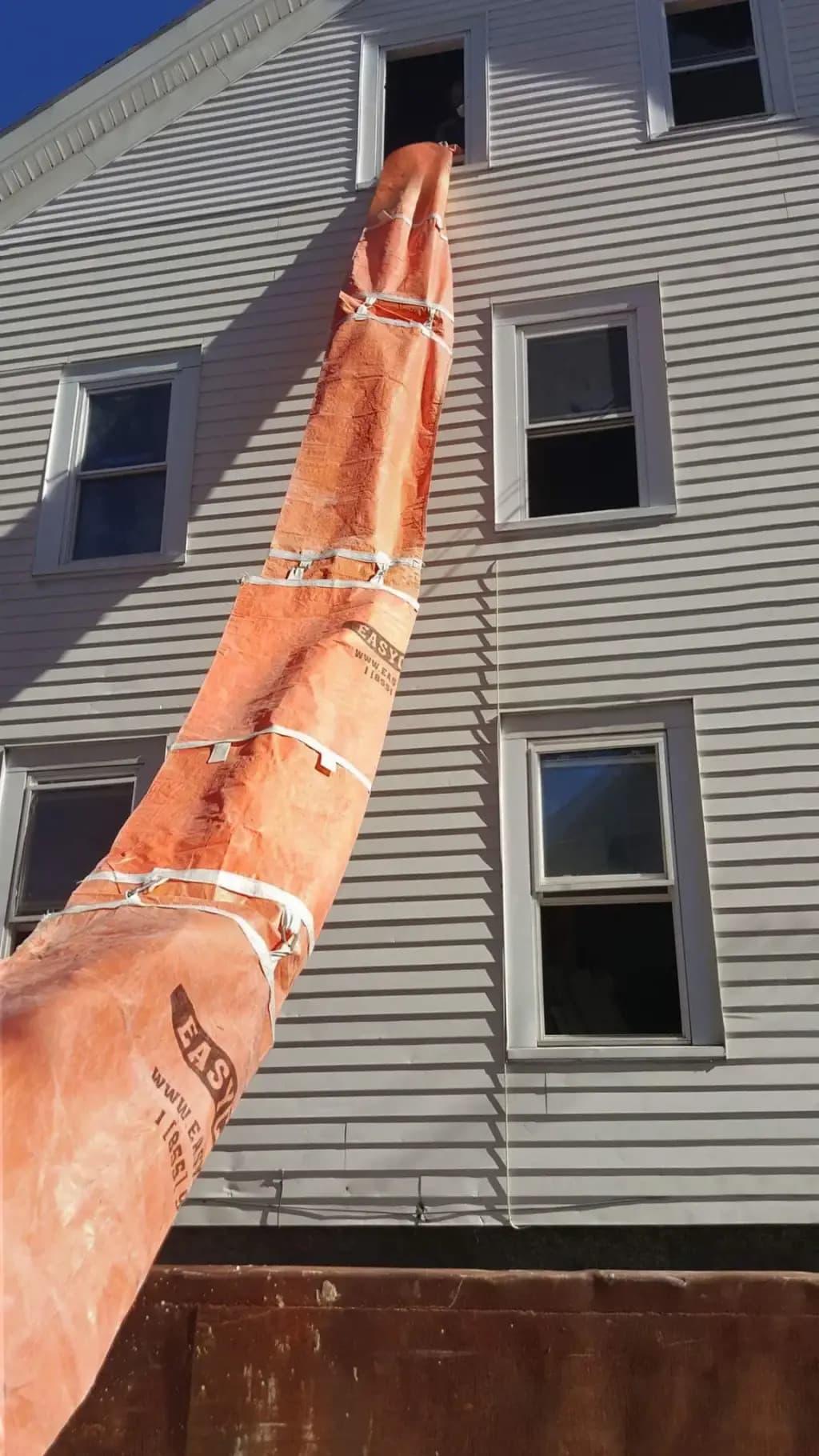
Why Michigan Crews Rely on a Fabric Trash Chute
Michigan's housing stock is a study in variety. Detroit and its inner-ring suburbs are packed with early-twentieth-century brick two-flats and three-stories that need full gut renovations — plaster walls, lath, cast-iron pipe, and decades of built-up roofing coming off at once. Grand Rapids sees plenty of wood-frame colonials and craftsman bungalows. Ann Arbor, Lansing, and Flint have a mix of Victorian-era homes and mid-century apartment blocks. Up north, Traverse City and Petoskey have resort condos and lakefront cottages that need seasonal work.
All of those project types share one problem: once you're two or more stories up, tossing debris out a window or off a roof edge creates a serious hazard for anyone below, scatters material across the property, and slows the job down. A debris chute channels everything from the upper floor straight into a dumpster or trash can below — no wheelbarrow runs up and down stairs, no debris scattered across the lawn, no bystander risk.
EasyChute is made from woven, coated poly fabric that is tear-resistant and lightweight enough that one person can carry a 50-foot section to the job site under one arm. A 10-foot section weighs under 3 pounds and folds down to fit in a drawer. A 50-foot section weighs under 15 pounds. When the job is done, the chute folds back up and goes into your truck for the next project.
Choosing the Right Trash Chute Length for Michigan Buildings
The right section length comes down to the height of the drop from your work level to the dumpster or collection point on the ground. Here's a simple reference:
- 10-foot section (≈ one story): The EasyChute Lite-Duty 10 ft Section ($99) works well for single-story additions, detached garages, and low-slope roofs. The Heavy-Duty 10 ft Section ($149) handles heavier loads like bundled shingles and concrete block.
- 25-foot section (≈ two and a half stories): The EasyChute 25 ft Section ($277) covers most Michigan two-family homes and three-story brick walk-ups. If you're working the third floor of a Detroit two-flat or a Grand Rapids triple-decker, this is your go-to.
- 50-foot section (≈ five stories): The EasyChute 50 ft Section ($596) suits mid-rise apartments, commercial buildings, and any project where the drop is four or five stories. Sections connect loop-to-loop with carabiners or quick-connects, so you can also combine a 25-foot and a 10-foot section to dial in an exact length.
Every joint overlaps 1.5 feet and middle shortening straps let you adjust the overall length, keeping dust and debris inside the chute the whole way down. The chute is 22 inches in diameter — wide enough for a full sheet of drywall dropped on edge or a bundle of shingles broken apart.
The OSHA 20-Foot Rule Every Michigan Contractor Should Know
OSHA 29 CFR 1926.252(a) states that when materials are dropped more than 20 feet to any point outside the exterior walls of a building, an enclosed chute must be used. On a typical Michigan two-story home, the eave line is already close to that threshold. On a three-story brick flat or a commercial building, you're well past it.
EasyChute meets or exceeds the applicable OSHA regulations, so using it keeps your crew on the right side of federal safety rules. If your project involves a permit or a specific local inspection requirement, check with your local Michigan building department — permit rules and inspection requirements vary by municipality.
Michigan Weather and Your Chute Setup
Michigan runs the full range of conditions: humid summers in the Lower Peninsula, heavy lake-effect snow along the western coast and the Upper Peninsula, and hard freeze-thaw cycles that can make morning setups a challenge. A few practical notes for working through that climate:
- In high winds — common along Lake Michigan's shoreline or during fall storm systems moving across the state — keep the chute anchored close to the building. The connection loops give you multiple anchor points at the top and bottom to keep the chute from swinging away from the wall.
- In very cold weather, debris like frozen roofing felt or ice-backed shingles can be heavier than expected. Use the heavy-duty section for any load that includes ice-laden material.
- Always check that the dumpster or collection point at the base is positioned correctly before you start feeding debris — repositioning a full dumpster mid-job wastes time.
How to Set Up a Debris Chute on a Michigan Job Site
Setup takes one person about ten minutes. Here's the sequence:
- Position your dumpster. Place it directly below the window, roof edge, or scaffold opening you plan to feed debris from.
- Make a hopper. Take a standard 32-gallon commercial trash can, remove the bottom, and set it in the window opening or on the roof edge. This acts as a funnel to guide debris into the top of the chute.
- Hang the top of the chute. Use the four woven connection loops at the top of the first section. Tie off or clip to a scaffold rail, window frame anchor, or roof edge cleat. No outrigger or frame is needed.
- Connect additional sections. If your drop requires more than one section, connect them loop-to-loop with carabiners. Each joint overlaps 1.5 feet to seal the connection.
- Adjust length. Use the middle shortening straps to fine-tune so the bottom of the chute sits just inside or over the dumpster opening.
- Feed debris slowly. Don't overload the chute with one massive dump. Steady, controlled feeding keeps the chute tracking straight and prevents clogging.
For large-volume Detroit gut jobs and high-rise tearouts, see our detailed workflow guide: Detroit Large Tear-Out Debris Removal: High-Volume Chute Workflow.
Order a Trash Chute Shipped Free to Your Michigan Job Site
EasyChute sells at fixed prices online — no quotes, no calls required. Every order ships free to any address in the United States, including job sites anywhere in Michigan. Orders are placed through the online shop, and you can reach the EasyChute team by phone at 855-902-4883 (Mon–Fri, 8 AM–10 PM Eastern) or by email at orders@easychute.com if you have questions before you order.
Not sure which section is right for your job? Visit the FAQ page or contact the team for guidance. When you're ready, shop all chute sections and get free shipping straight to your Michigan job site.
Frequently asked questions
Does EasyChute ship trash chutes to Michigan job sites?
Yes. EasyChute ships free to job sites anywhere in the United States, including every city and county in Michigan. You order online at a fixed price and the chute ships directly to your site address. There is no minimum order and no shipping charge.
Which chute section is right for a two-story Michigan house?
The 25-foot section covers approximately two and a half stories, making it the right fit for most two-story homes and three-story walk-up apartment buildings common across Michigan cities. If you're working the top floor of a taller building, combine a 25-foot and a 10-foot section using the connection loops and carabiners.
Does OSHA require an enclosed chute on Michigan renovation jobs?
OSHA 29 CFR 1926.252(a) requires an enclosed chute whenever debris is dropped more than 20 feet outside a building's exterior walls — that threshold applies to job sites nationwide, including Michigan. EasyChute meets or exceeds the applicable OSHA regulations. Always verify any local permit or inspection requirements with your local building department.
Can I use the same chute on multiple Michigan job sites?
Absolutely. EasyChute is reusable job after job. After each project, fold the sections up — a 10-foot section fits in a drawer or small box — and store them in your truck or trailer. The tear-resistant woven, coated poly fabric holds up through repeated use on different sites.
Can I connect multiple EasyChute sections for a taller Michigan building?
Yes. Each section has four woven connection loops at the top and four at the bottom. You join sections loop-to-loop with carabiners or quick-connects, and every joint overlaps 1.5 feet to keep dust and debris inside. Middle shortening straps let you fine-tune the total length for any drop.