
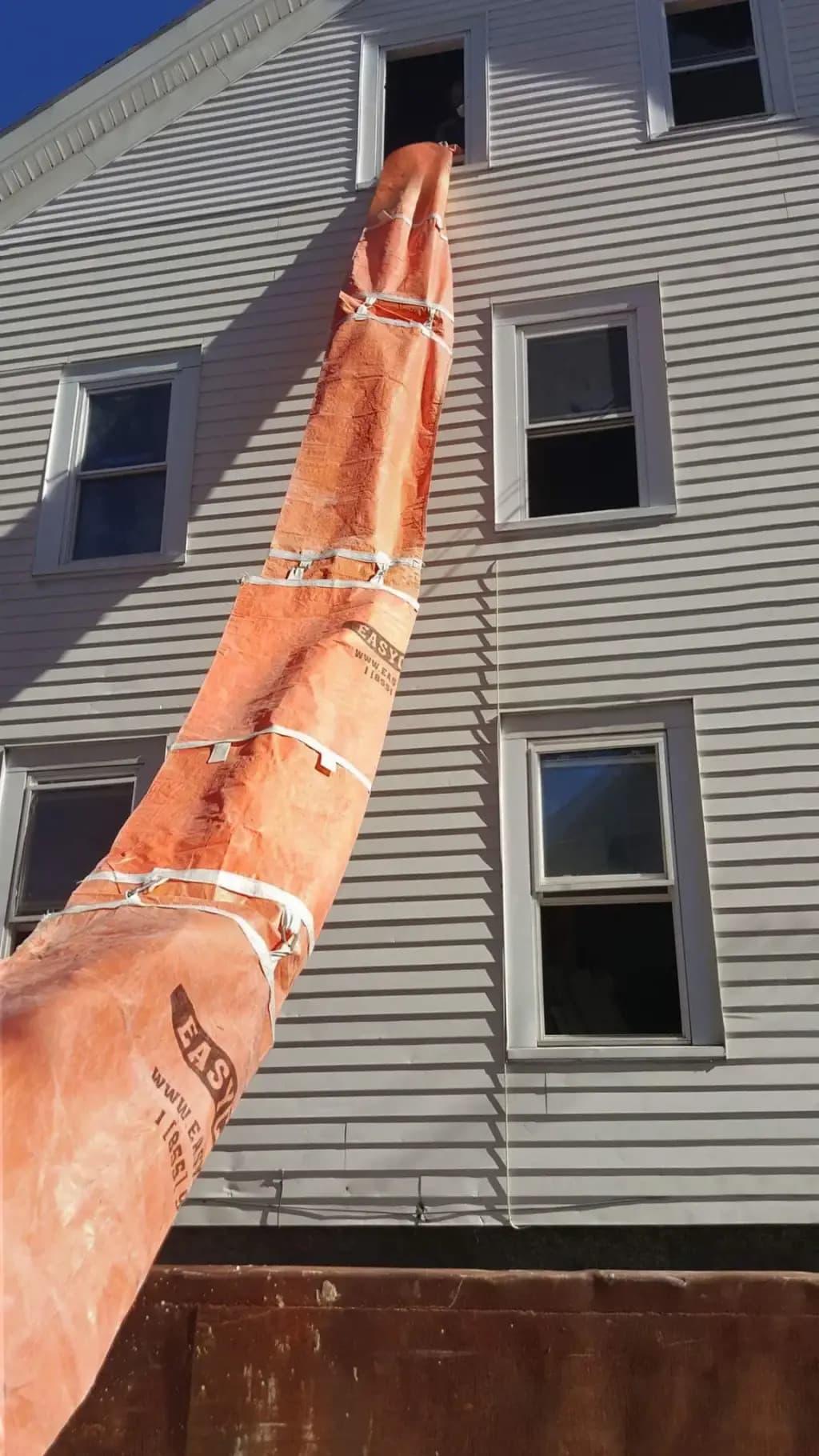
Whether you're tearing off a shingle roof in Anchorage, gutting a commercial building in Fairbanks, or remodeling a warehouse in Juneau, getting debris from upper floors to a dumpster below is one of the most physically demanding parts of the job. A trash chute Alaska contractors can rely on changes that equation completely — debris flows down through an enclosed fabric sleeve instead of getting hauled down stairs, tossed from balconies, or dropped in ways that endanger workers below.
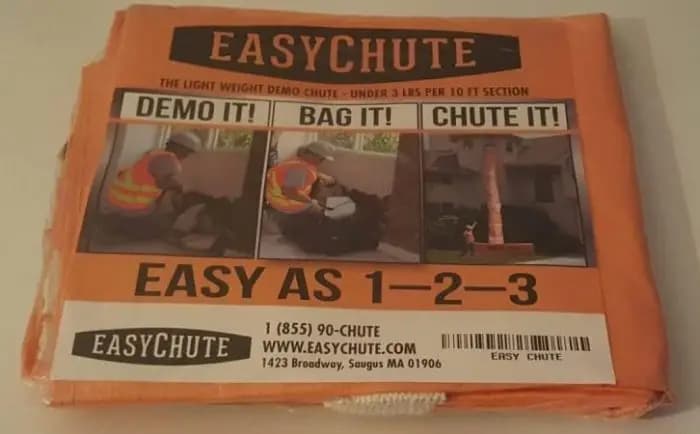
EasyChute ships our lightweight, woven coated-poly debris chutes free to job sites anywhere in Alaska, including the Mat-Su Valley, Kenai Peninsula, Southeast Alaska, and remote communities accessible by freight. Every section folds small enough to travel with your crew, weighs under 15 lbs even at 50 feet, and sets up without outriggers, rental equipment, or a dedicated crew. Order online at a fixed price and we'll get it on its way to your site.
Trash chutes shipped free to Alaska
Free shipping on every order. See the full shop.
Why Alaska Crews Reach for a Fabric Trash Chute
Alaska has one of the most active construction and renovation economies of any state its size. Anchorage alone is home to a dense mix of mid-rise commercial buildings, wood-frame residential neighborhoods, and post-earthquake-era structures that see constant renovation work. Fairbanks crews tackle cold-climate retrofits — insulation tear-outs, window replacements, and roof overhauls — year after year. Juneau and Ketchikan, hemmed in by mountains and water, depend on existing building stock that needs ongoing maintenance and upgrades rather than new sprawl.
Across all of these markets, the challenge is the same: debris has to get from the work floor to a container on the ground safely and efficiently. Hand-carrying loads down ladders is slow and hard on workers. Tossing material off a roof edge creates flying debris hazards and is a direct OSHA violation once you're dropping material more than 20 feet outside the building's exterior walls. A fabric construction chute solves both problems at once.
Understanding the OSHA 20-Foot Enclosed-Chute Rule
Federal OSHA regulation 29 CFR 1926.252(a) states that when material is dropped more than 20 feet to any point outside the exterior walls of a building, an enclosed chute must be used. That covers most roofing and upper-floor demolition work on buildings taller than two stories — a very common scenario on Anchorage commercial blocks and Fairbanks school renovation projects alike. EasyChute debris chutes meet or exceed applicable OSHA regulations, so you can satisfy that requirement with equipment you already own rather than renting a specialty system.
Even on jobs where the drop is under 20 feet, an enclosed chute keeps dust inside the sleeve instead of spreading across the site, the sidewalk, or neighboring properties — a real benefit in any Alaska town where work often happens close to neighbors or active streets.
Choosing the Right Sections for Alaska Building Heights
EasyChute sections are available in three lengths, and they connect together with carabiners or quick-connects through four woven loops at the top and bottom of each section. Every joint overlaps 1.5 feet to keep dust and debris contained through the connection point.
- 10-foot section (≈ one story): The EasyChute Lite-Duty 10 ft Section ($99) works well for single-story additions, low-slope residential roofs, and jobs where you only need to bridge one floor. The Heavy-Duty 10 ft Section ($149) handles denser material like plaster, lath, and roofing shingles. Under 3 lbs each, they're easy to carry up a ladder.
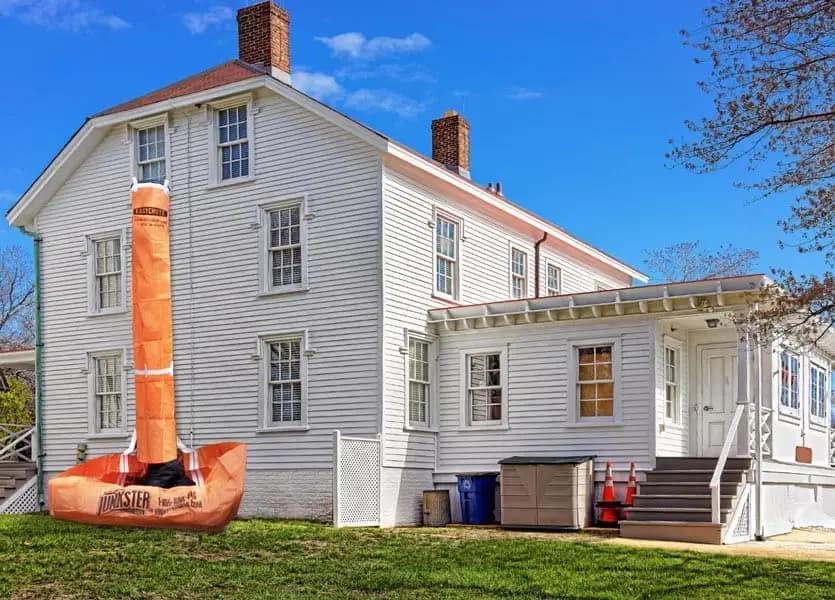
- 25-foot section (≈ two and a half stories): The EasyChute 25 ft Section ($277) is the go-to for most two- and three-story residential work — exactly the kind of wood-frame houses that make up large portions of Anchorage's residential neighborhoods. Under 8 lbs and folds into a compact bundle.
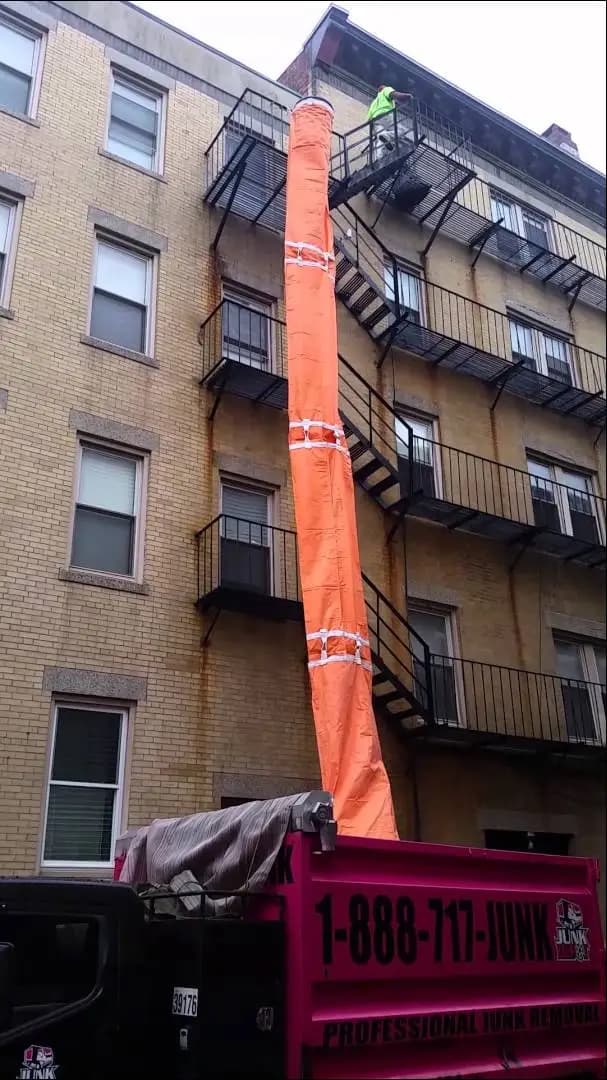
- 50-foot section (≈ five stories): The EasyChute 50 ft Section ($596) handles mid-rise commercial or mixed-use buildings, common along Anchorage's downtown core or Fairbanks commercial districts. Under 15 lbs and reusable across multiple projects.
Sections connect to each other for taller runs. If you're working a four-story building, two 25-foot sections linked together give you the reach you need. Middle shortening straps on each section let you fine-tune the length so the chute mouth lands directly over your dumpster.
Working Through Alaska's Climate on the Job Site
Alaska's climate runs the full spectrum — coastal Southeast Alaska sees heavy rainfall much of the year, Interior Alaska faces extreme cold and wind in winter, and South-Central Alaska gets everything in between including significant snowfall. While we make no specific claims about how our chute fabric performs in any particular weather condition, the practical reality is that most construction and renovation work in Alaska is done during the shoulder seasons and summer months when conditions are workable, and the lightweight design of EasyChute sections means they're easy to carry in and out of the work area at the start and end of each shift.
The woven, coated poly fabric is tear-resistant and built for the physical demands of construction debris — drywall chunks, plywood scraps, old insulation batts, and roofing material are all well within its design intent. Setup and takedown take minutes, so you're not leaving equipment exposed when it doesn't need to be.
Setting Up Your Trash Chute on an Alaska Job Site
- Anchor the top: Hang the chute from a window frame, roof edge, scaffold rail, or fire escape using the four woven connection loops at the top of the first section. No outrigger frame or rental hoist required.
- Add a hopper (optional but recommended): A standard 32-gallon commercial trash can with the bottom removed dropped into the top of the chute creates a wide-mouth hopper that makes feeding debris in much easier and cuts down on dust escaping at the top.
- Connect additional sections: Loop the bottom loops of the upper section to the top loops of the next section. Carabiners or quick-connects hold the joint. The 1.5-foot overlap at each connection keeps debris inside the sleeve through the joint.
- Adjust length with shortening straps: Use the built-in middle straps to shorten any section so the chute mouth positions directly over your dumpster or debris pile rather than swinging in the breeze.
- Load debris and work safely: Feed material in steadily. Avoid overloading a single section at once. Keep the area below the chute mouth clear of workers at all times.
Free Shipping to Alaska Job Sites — Order Online
EasyChute sells at fixed prices with free shipping on every order, including deliveries to job sites across Alaska. You don't need a quote, a sales rep, or a local supplier relationship. Order directly at easychute.com/shop, and if you have questions before you buy, reach us by phone at 855-902-4883 (Mon–Fri, 8 AM–10 PM Eastern) or by email at orders@easychute.com. You can also visit our FAQ page for answers to common questions about sections, connections, and setup.
Our debris chutes are reusable job after job, so the cost spreads across every project you bring them to. For roofing crews and remodeling contractors in Alaska who work the same building types season after season, that's a straightforward value. Shop all EasyChute sections and pick the length that matches your next project.
Frequently asked questions
Does EasyChute ship trash chutes to Alaska job sites?
Yes. EasyChute ships free to job sites anywhere in the United States, including Alaska. You order online at a fixed price and we ship directly to your site address. No local pickup or distributor is required.
What size trash chute section do I need for a typical two-story house in Anchorage?
The 25-foot section is designed for roughly two and a half stories and is a practical fit for most two- to three-story residential buildings. It weighs under 8 lbs and folds into a compact bundle. If you need more reach, sections connect together using carabiners through the woven loops at the top and bottom of each section.
Does the OSHA enclosed-chute rule apply to roofing jobs in Alaska?
Federal OSHA regulation 29 CFR 1926.252(a) applies on job sites across the United States, including Alaska. It requires an enclosed chute when material is dropped more than 20 feet to any point outside the exterior walls of a building. EasyChute debris chutes meet or exceed applicable OSHA regulations. For specific questions about inspections or enforcement in your area, check with your local building or safety authority.
Can I connect multiple EasyChute sections together for taller buildings?
Yes. Sections connect loop-to-loop using carabiners or quick-connects — four woven loops at the top and four at the bottom of each section. Each joint overlaps 1.5 feet to keep dust and debris contained through the connection. You can stack sections to reach the height of mid-rise commercial buildings or multi-story residential structures.
How do I anchor a trash chute on a job site with no scaffold?
EasyChute hangs directly from a window frame, roof edge, or fire escape using the woven loops at the top of the first section — no outrigger, hoist, or rental frame needed. A standard 32-gallon commercial trash can with the bottom removed can be set into the top of the chute to act as a hopper, making it easier to feed debris in without spills.