
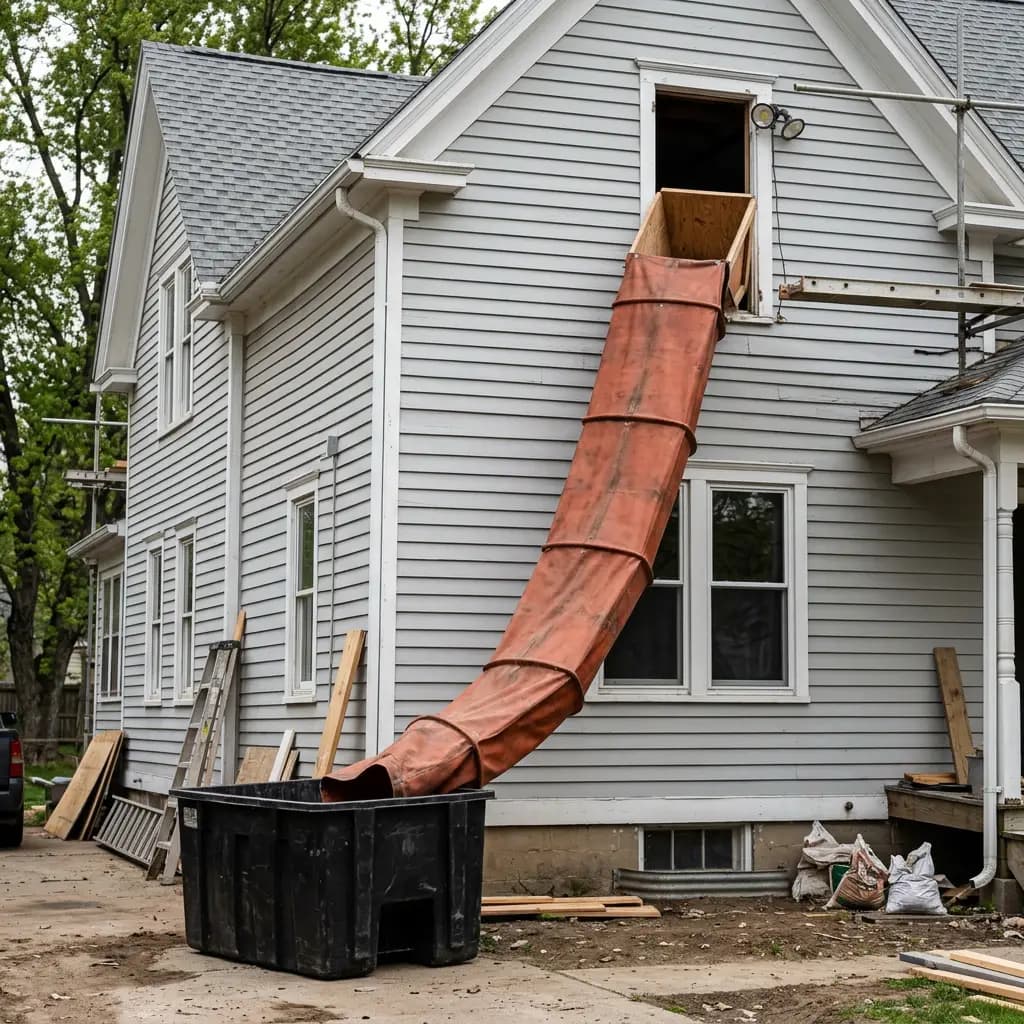
Dumpster placement window debris chute Trenton renovations require careful planning because Trenton’s housing stock — which includes dense rowhouses, attached colonials, and mixed-use buildings — often features constrained street access, narrow lot widths, and parking requirements that limit where a dumpster can go. Getting the dumpster in the right position before you set up the chute is the single most important step in the workflow.
This guide covers practical Trenton debris chute dumpster placement strategy for window-drop setups, including how to align the container for maximum chute accuracy and minimum scatter.
Why Dumpster Position Matters More Than Chute Length
Contractors often focus on getting the right chute length and overlook the importance of dumpster position. But even a perfectly sized chute will cause scatter and bounce-out if the dumpster isn’t positioned correctly relative to the loading window. In Trenton’s tight street environments, you may only have one viable placement spot — so getting it right before the hauler drops the container saves significant time.
How to Determine the Correct Dumpster Position
Before the dumpster arrives, stand at the loading window and assess:
- Directly below the window — the ideal position; allows the shortest, most vertical chute run with the most accurate discharge
- Offset to one side — acceptable if direct placement isn’t possible (e.g., there’s a walkway or landscaping directly below); increases chute arc slightly but is workable
- Street-side placement with permit — in Trenton, contact the city’s DPW for a street-use permit if the dumpster needs to go in the street; many block-face rowhouse renovations require this
Mark the dumpster spot with spray paint or cones before the hauler arrives so they drop it in exactly the right position. Most haulers won’t reposition without an additional fee.
Calculating Chute Length From Dumpster Position
Once the dumpster is in position, measure from the loading window sill to the top of the dumpster rim. Add 6–12 inches of buffer. That’s your chute length. For New Jersey debris chute window-drop setups in Trenton’s rowhouse zones, most first and second-floor setups fall in the 15–30 foot range.
See our trash chute length guide for a complete measurement walkthrough. Also reference our debris chute rental vs buy guide for cost-per-job analysis that applies to NJ/PA market contractors. For permit requirements in Trenton, check the Trenton Department of Public Works (opens in new tab).
Order EasyChute for Your Trenton Window-Drop Job
EasyChute ships fast to Trenton and the greater NJ/PA corridor. Visit our shop or the debris chute product page to configure your system.